- 1. Understanding the MEPCO Overbilling Phenomenon
- 2. Common Causes: Snapshot Errors, Slabs & Cycle Extensions
- 3. Step-by-Step Forensic Audit: Meter Screen vs Paper Bill
- 4. Obtaining a Revised Bill Correction Slip from the SDO
- 5. Securing a Due Date Extension Without Incurring LPS
- 6. The Role of PITC Mobile Meter Reading Applications
- 7. NEPRA's Strict Directives on 30+ Day Billing Cycles
- 8. How Unit Reversals and Credit Adjustments (Cr. Adj) Work
- 9. Preventive Measures: Monthly Photography & Self-Monitoring
- 10. Frequently Asked Questions (FAQs)
1. Understanding the MEPCO Overbilling Phenomenon
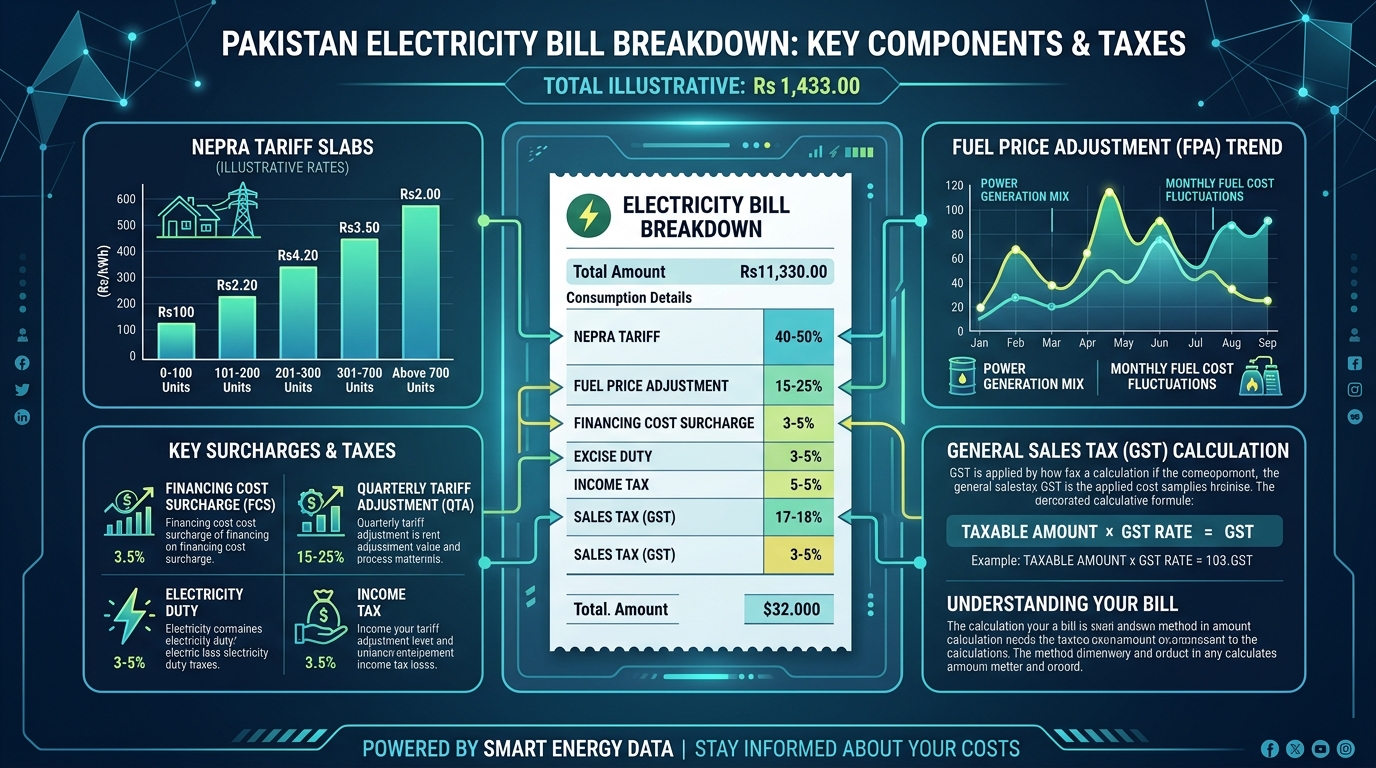
Few consumer grievances in Pakistan create more acute financial distress than receiving a sudden, unexplainably inflated monthly electricity bill from MEPCO. When a bill shows 500 units instead of your customary 200 units, the financial blow is multiplied exponentially. Due to Pakistan's steep tiered tariff structure, crossing the critical 200-unit Protected Consumer Slab or the 300-unit Unprotected Slab increases per-unit electricity prices from Rs. 14/kWh to over Rs. 42/kWh, while triggering heavy mandatory general sales tax (18%), advance income tax, and fuel price adjustments (FPA).
Contrary to popular belief, overbilling is rarely an unfixable disaster. In over 85% of cases, inflated bills stem from straightforward human error during manual meter reading rounds, incorrect optical image uploads, reading cycle extensions beyond 30 days, or digit transposition by data entry operators. When caught before the bill's due date, consumers can systematically obtain an official Revised Bill Correction Slip and pay only for actual electrical energy consumed.
2. Common Causes: Snapshot Errors, Slabs & Cycle Extensions
To challenge an inflated bill effectively, you must understand the exact technical defect responsible for the discrepancy:
- Digit Transposition Error: A meter reader reading an LCD display of
01482units accidentally keys01842into his handheld Android terminal, instantly generating 360 phantom units. - Unclear / Blurry Meter Snapshot: The meter reader captures an out-of-focus photograph of the meter dial or shoots a neighboring meter in a crowded meter box.
- Extended Billing Cycles Exceeding 30 Days: Under NEPRA regulations, a standard billing month must encompass 28 to 31 days. When meter readers delay their rounds and record 35 or 37 days of consumption on a single bill, innocent consumers are artificially pushed into higher tariff slabs, permanently stripping them of protected status.
- Ghost Reading / Table Reading: In extreme rural or high-density urban areas, negligent staff may fail to visit the premises, instead fabricating estimated numbers from the comfort of an office.
3. Step-by-Step Forensic Audit: Meter Screen vs Paper Bill
Before proceeding to the MEPCO sub-divisional office, conduct this straightforward forensic audit at home:
- Walk to your physical electricity meter with your smartphone camera and the disputed bill in hand.
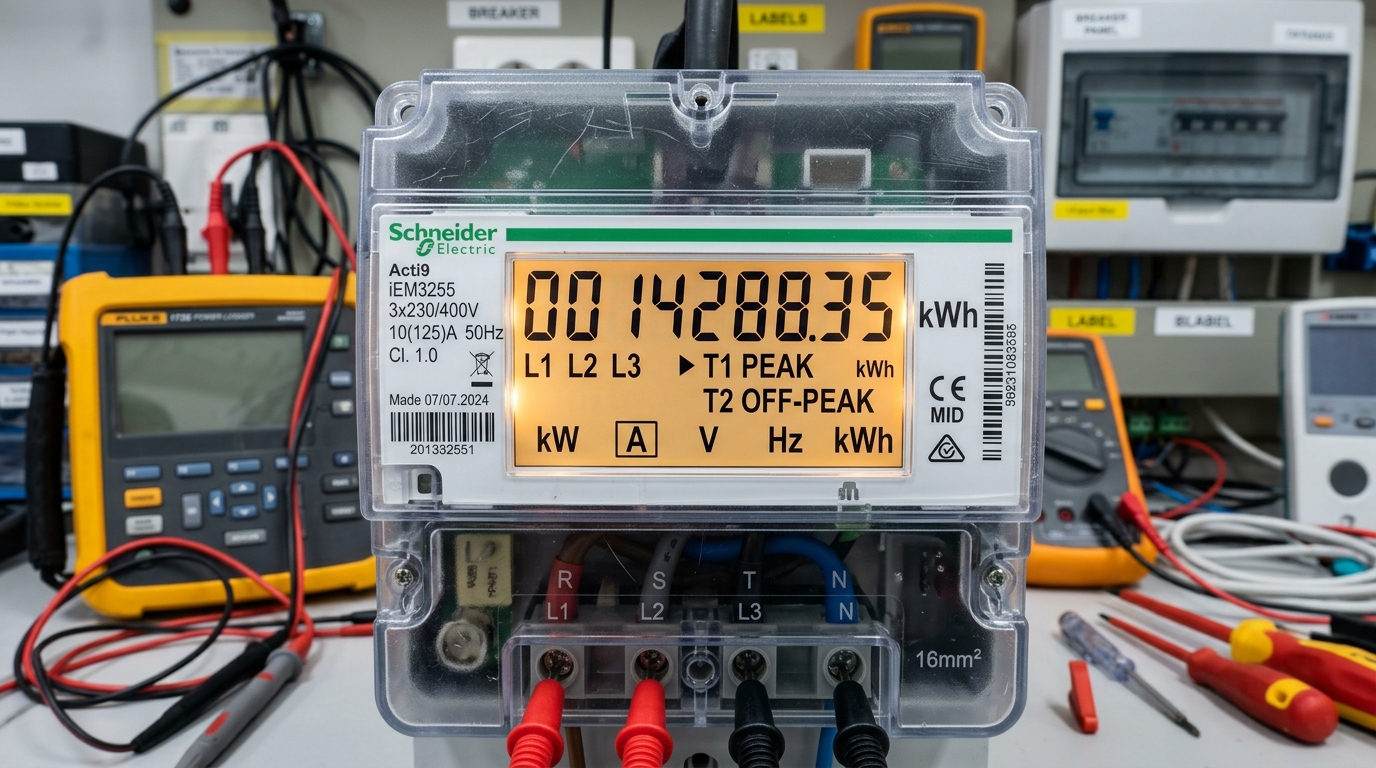
- Wait for the digital LCD display to cycle through its sequential modes until code
03orkWhappears. This screen represents your total cumulative kilowatt-hours consumed since installation. - Snap a high-resolution, glare-free photograph clearly displaying both the Cumulative Units Number and your Meter Serial Number printed on the glass casing.
- Examine the bottom section of your paper bill where the printed meter snapshot appears. Compare the Present Reading on the paper bill with the number showing on your live meter screen today.
- The Golden Rule: If the present reading printed on your bill is HIGHER than the actual number currently displayed on your physical meter screen, you have undeniable, airtight legal proof of overbilling!
4. Obtaining a Revised Bill Correction Slip from the SDO
Once you have documented your physical reading proof, do not pay the inflated bill online or at a commercial bank. Banks cannot modify billing amounts without an official authorization stamp. Instead, follow this correction procedure:
Step-by-Step Rectification Workflow:
- Print two copies of your smartphone photograph showing the physical meter reading alongside your meter serial number.
- Take the original disputed bill and visit the Revenue Officer (RO) or Sub-Divisional Officer (SDO) at your designated MEPCO Sub-Division.
- Present your proof to the billing data officer. The officer will verify the telemetry on the live PITC CCMS server.
- Upon confirming the error, the SDO will issue a computer-generated Bill Rectification Slip (Correction Challan).
- The correction slip subtracts the erroneous units, recalculates your base tariff according to your true slab, deducts proportionally inflated taxes (GST, FPA, TV fee), and issues a revised payable total.
- The SDO or Revenue Officer stamps and signs both copies, allowing you to pay the corrected amount immediately at designated National Bank of Pakistan (NBP) or post office branches.
5. Securing a Due Date Extension Without Incurring LPS
If your bill correction process requires technical verification that takes several days, never allow your original due date to expire without written protection. SDOs possess the statutory administrative power to extend your bill's due date by 3 to 5 working days by endorsing the bill with an official "Due Date Extended Without LPS" stamp and signature. This ensures you do not incur an unfair 10% Late Payment Surcharge while your dispute is under review.
6. The Role of PITC Mobile Meter Reading Applications
To eliminate manual meter reading fraud, MEPCO has deployed the PITC Android-based Mobile Meter Reading app. Meter readers are required by company policy to capture an image with embedded GPS coordinates and cellular timestamps. If your bill shows a black box or an unreadable photo, the meter reader has breached official protocol, providing solid grounds for immediate administrative rectification.
7. NEPRA's Strict Directives on 30+ Day Billing Cycles
In landmark regulatory rulings, NEPRA strictly warned DISCOs against arbitrarily manipulating billing cycle durations. If your MEPCO bill indicates a billing span of 32, 35, or 37 days that forced your household out of the protected slab (under 200 units), you are legally entitled to have the extra days bifurcated and credited into the subsequent month under NEPRA Consumer Affairs directives.
8. How Unit Reversals and Credit Adjustments (Cr. Adj) Work
If an overbilled bill was accidentally debited or paid under protest to avoid disconnection, you do not lose that money. Under MEPCO billing manual regulations, the Revenue Officer creates an electronic credit entry designated as Cr. Adj (Credit Adjustment). When the next month's bill is processed, the negative monetary balance is deducted from your new consumption charges, ensuring full financial restitution.
9. Preventive Measures: Monthly Photography & Self-Monitoring
The most effective strategy against overbilling is active self-monitoring. On the scheduled reading date printed on your past bills (e.g., the 12th of every month), take a 5-second video or photo of your meter LCD screen. Keeping this monthly digital archive protects your household against phantom estimates and retroactive back-billing.
10. Frequently Asked Questions (FAQs)
Q1: What should I do if the SDO refuses to correct an obvious wrong meter reading?
Immediately approach the Executive Engineer (XEN) at your Division headquarters or file an online complaint on the Prime Minister's Citizen Portal and NEPRA CAD portal with your photographic evidence.
Q2: If I accidentally paid an overbilled amount, will I get my money back?
Yes. MEPCO does not issue cash refunds, but the Revenue Officer will enter a Credit Adjustment (Cr. Adj) into the billing ledger. The overpaid amount will be deducted automatically from your subsequent monthly electricity bills until fully amortized.
Q3: Can meter readers take readings from outside locked gates?
Yes, if your meter is installed on an external boundary wall or pole-mounted casing. If installed inside your courtyard, you must provide unobstructed visual access during reading cycles.