Solar Energy & Conservation
Solar Net Metering in Pakistan: Complete Step-by-Step Guide, Green Meter & Billing
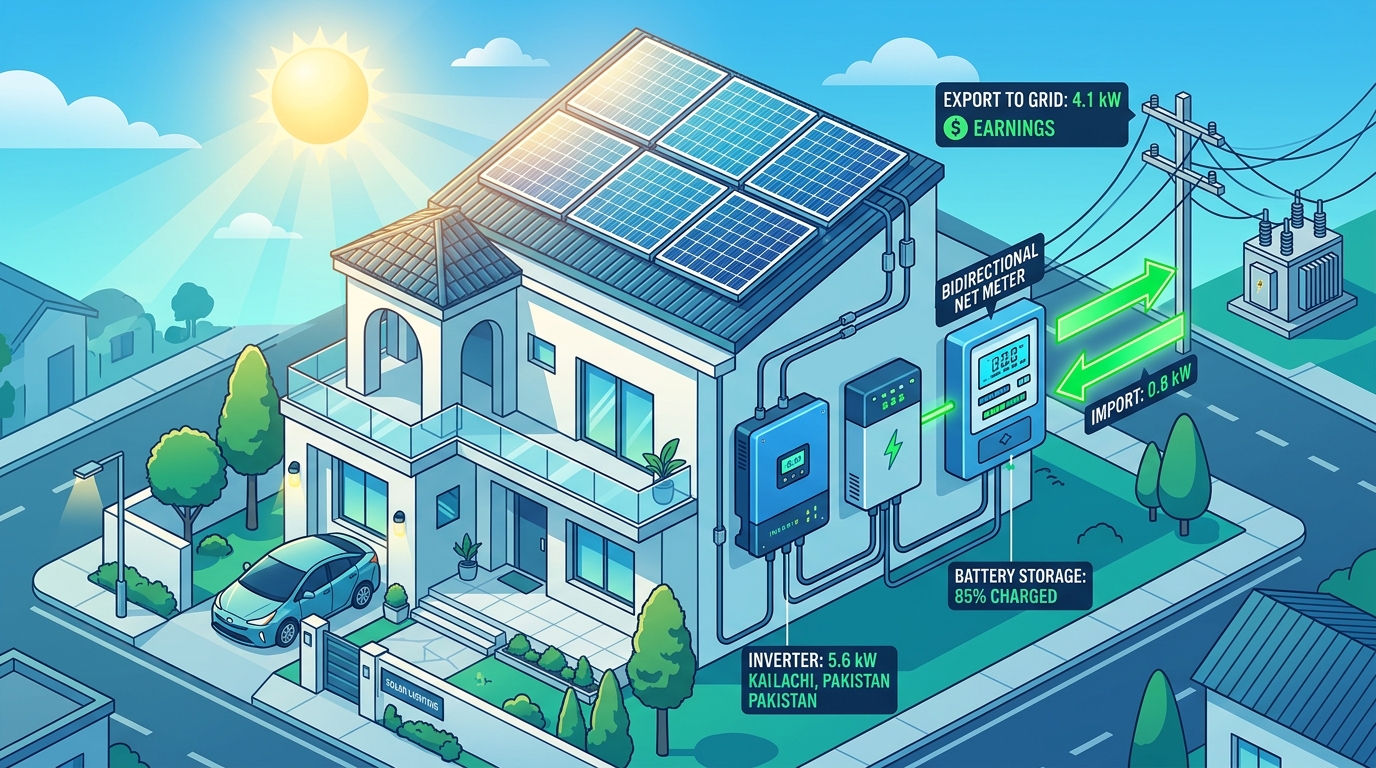
With electricity unit prices surging in Pakistan, residential and commercial consumers are rapidly turning to rooftop solar photovoltaic (PV) systems with Net Metering. Net metering allows you to export excess electricity generated during sunny daytime hours back to the national grid in exchange for bill credits.
This comprehensive guide details the eligibility criteria, NEPRA regulations, step-by-step application workflow, and how to read the net metering calculation section on your DISCO electricity bill.
💡 سولر نیٹ میٹرنگ — ضروری معلومات (Quick Summary)
- گرین میٹر: نیٹ میٹرنگ کے لیے دو طرفہ (Bi-directional) گرین میٹر لگایا جاتا ہے جو درآمد (Import) اور برآمد (Export) دونوں یونٹس ریکارڈ کرتا ہے۔
- تھری فیز میٹر لازمی: نیٹ میٹرنگ کی درخواست کے لیے آپ کے پاس تھری فیز (Three-Phase) کنکشن ہونا ضروری ہے۔
- بل کی ایڈجسٹمنٹ: دن کے وقت واپڈا کو دی گئی اضافی بجلی کے یونٹس رات کو استعمال ہونے والے یونٹس سے مائنس (Offset) ہو جاتے ہیں۔
1. What is a Bi-Directional "Green Meter"?
A standard electricity meter only spins in one direction, recording the electricity you pull from the grid (Import Units). If you attach a solar system without a net meter, the solar energy pushed into the grid may wrongly be billed to you as consumption.
A Bi-Directional Green Meter has specialized internal programming that records two separate unit registers:
- Import Units (kWh): Electricity you pulled from the DISCO grid at night or on cloudy days.
- Export Units (kWh): Surplus solar energy pushed into the grid during daytime sunshine.
2. Eligibility Criteria for Net Metering in Pakistan
To qualify for net metering under NEPRA SRO 892(I)/2015 regulations:
- Three-Phase Connection: You must have a sanctioned 3-phase electricity meter. If you have a single-phase connection, you must first apply for a 3-phase load extension.
- Approved On-Grid Inverter: The solar inverter must be on NEPRA's certified Type-Approval list (e.g. Huawei, Sungrow, Growatt, Solis, Knox, GoodWe, Inverex).
- Sanctioned Load Match: The solar inverter capacity must not exceed 1.5 times the sanctioned load of your electricity connection.
3. How Net Metering Billing & Unit Settlement Works
At the end of each billing month, the DISCO subtracts your Export Units from your Import Units:
If your Export > Import: You pay Rs 0 energy charges, and your surplus units are credited to your account. Every 3 months (Quarterly), the DISCO pays you for accumulated surplus units or offsets your fixed meter rent!
4. Application Process & Required Documents
- Copy of CNIC of the electricity connection owner.
- Copy of the latest paid electricity bill.
- Solar vendor technical certificate & Single Line Diagram (SLD).
- Inverter & Solar Panel test reports and warranty cards.
5. Net Metering Economics: Buyback Rates, Export Settlements & ROI
Rooftop solar distributed generation has transformed Pakistan's residential and commercial energy landscape. Operating under the NEPRA Alternative and Renewable Energy Distributed Generation and Net Metering Regulations (2015), over 150,000 homes have installed bi-directional green meters to offset high grid utility bills.
1. National Grid Buyback Tariffs & Financial Settlement Mechanics
When your photovoltaic array produces surplus electrical energy during daytime hours, current flows backward through the bi-directional smart meter into the DISCO distribution transformer. This exported energy is recorded under 'Export Units' (Peak/Off-Peak). In your monthly utility invoice, imported kWh units are netted against exported kWh units on a 1-to-1 volumetric basis:
- Surplus Credit Rollover: If your monthly export exceeds your import, the net surplus kWh credits are automatically rolled over to subsequent billing cycles as financial currency credits (valued at NEPRA's national average generation cost, approximately Rs. 21 to Rs. 24 per unit).
- Quarterly Cash Settlement: Under NEPRA regulations, accumulated financial credits can be paid out directly to the consumer's commercial bank account at the end of each fiscal quarter upon formal request to the DISCO Revenue Officer.
2. 10kW On-Grid Solar System Financial Payback Analysis
A standard 10kW residential solar system installed in Punjab, Sindh, or Islamabad typically generates between 1,200 and 1,500 kWh units per month depending on seasonal irradiance. At an average unprotected grid displacement rate of Rs. 38/kWh, the monthly gross savings hover between Rs. 45,000 and Rs. 57,000. Considering modern Tier-1 monocrystalline bifacial panels (580W-650W) and European or Tier-1 string inverters with a capital outlay of Rs. 1.2M to Rs. 1.4M, the complete capital payback period is achieved in approximately 24 to 28 months.
6. Regulatory Compliance & 3-Phase Sanctioned Load Upgrades
Net metering applications in Pakistan can only be sanctioned on 3-phase electrical connections. If your property currently operates on a single-phase supply:
- Submit a load extension and phase-conversion application on
enc.com.pk. - Pay the DISCO demand note covering 3-phase meter cost and service wire reinforcement.
- Ensure your solar system capacity does not exceed 1.5 times your sanctioned grid load (e.g. for a 10 kW solar installation, your sanctioned load must be at least 6.7 kW to 7 kW).
- Procure and install an authorized DISCO-approved bidirectional digital meter with internal GSM/GPRS data logging.
7. Frequently Asked Questions (FAQ) - Solar Net Metering Pakistan
Q1: Can net metering export electricity during grid load-shedding?
Standard on-grid string inverters automatically shut down within milliseconds during a grid blackout (anti-islanding protection to protect line workers). To maintain power during outages, you must install a hybrid inverter equipped with lithium or tubular battery storage.
Q2: Does solar net metering exempt my bill from fixed TV fees and meter rents?
No. Even if your net unit consumption is zero or negative (credits), statutory base meter rent and the PTV license fee (Rs. 35) remain mandatory fixed charges under federal law.
Q3: What documents are required for NEPRA Net Metering Generation License?
You require: CNIC copy, latest paid electricity bill, solar panel and inverter flash test warranty certificates, an earthing pit test certificate (<5 ohms), wiring diagram stamped by an authorized engineer, and an application form submitted to the DISCO Net Metering Directorate.
Conclusion
Solar Net Metering is the single most effective way to eliminate electricity bills in Pakistan and achieve energy independence. Check your latest electricity bill on BillsOnlinePk to verify your sanctioned load before applying for net metering!