Tariff Slabs & Bill Verification
MEPCO Bill Calculation Formula 2026: How to Calculate Units, NEPRA Slabs, FPA, Taxes & Total Amount
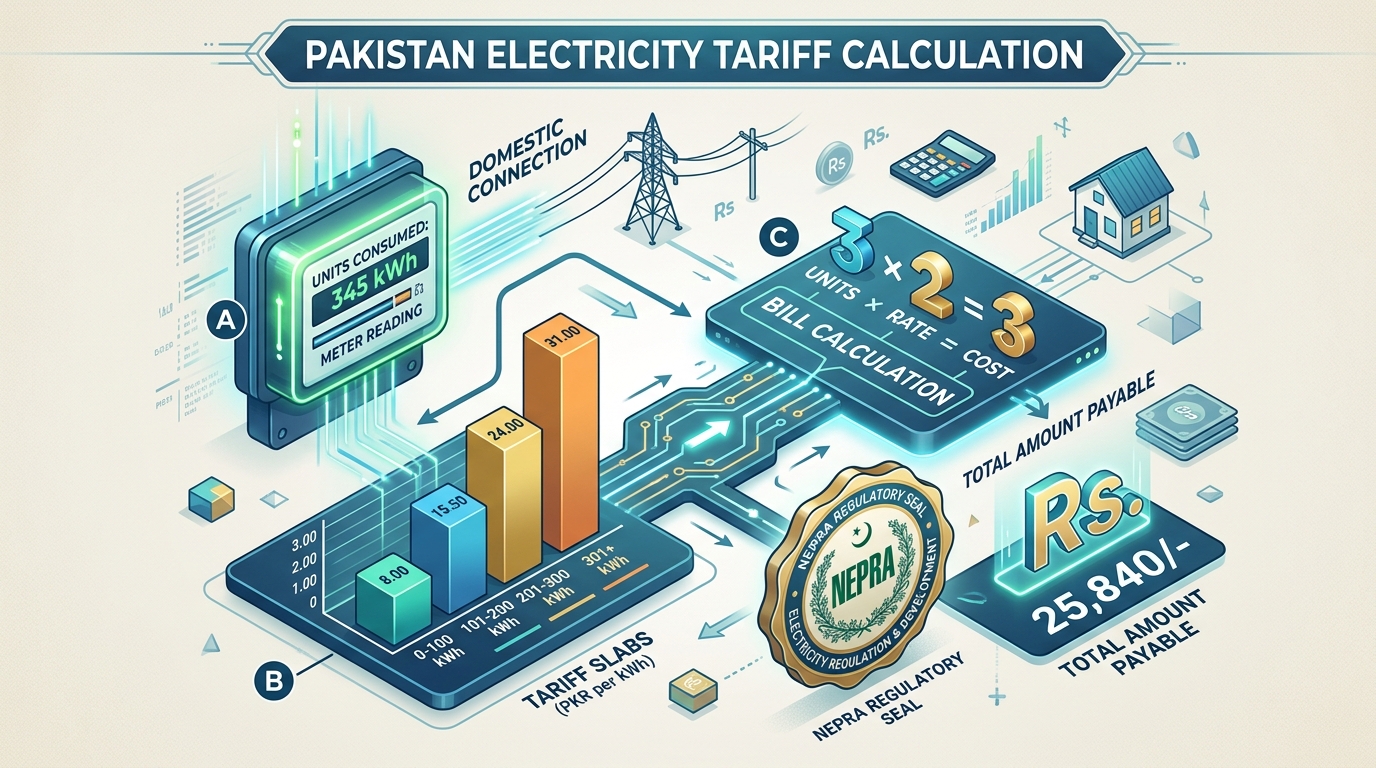
When looking at a computerized MEPCO bill in Pakistan, consumers are frequently perplexed by how a consumption of 200 units results in a bill of approximately Rs. 3,500, whereas burning just one extra unit — 201 units — causes the bill to explode beyond Rs. 7,800. This dramatic non-linear jump is not an arbitrary accounting error; it is the mathematical consequence of NEPRA's progressive slab structure, government cross-subsidies, and conditional taxation.
This comprehensive mathematical guide explains the step-by-step formula behind every rupee printed on your invoice: from base slab tariffs and Time-of-Use multipliers to Fuel Price Adjustments (FPA), Financing Cost (FC) Surcharges, 18% General Sales Tax, Electricity Duty, and Withholding Taxes under Section 235 of the Income Tax Ordinance.
💡 میپکو بجلی بل کا فارمولا 2026 — آسان اردو گائیڈ (Quick Summary)
- بل بننے کا بنیادی فارمولا: کل قابل ادا رقم = (بنیادی یونٹس ریٹ) + (فیول ایڈجسٹمنٹ FPA) + (ایف سی سرچارج 3.23 روپے) + (18 فیصد GST) + (الیکٹرسٹی ڈیوٹی) + (ٹی وی فیس 35 روپے)۔
- 200 یونٹ کا خوفناک اصول: اگر آپ کے یونٹ 200 یا اس سے کم رہیں تو آپ "پروٹیکٹڈ" رہتے ہیں اور ریٹ سستا (14 روپے) ہوتا ہے اور 18 فیصد GST معاف ہوتا ہے۔
- صرف 1 یونٹ زیادہ ہونے پر بل ڈبل: جونہی 201 یونٹ ہوں تو میٹر "ان پروٹیکٹڈ" ہو جاتا ہے، ریٹ سیدھا 27 روپے سے زیادہ ہو جاتا ہے اور پورے بل پر 18 فیصد GST لگ جاتا ہے۔
- FPA کا چارج: دو ماہ پرانے استعمال شدہ یونٹس پر بین الاقوامی فیول کی قیمتوں کے مطابق فی یونٹ لاگو ہوتا ہے۔
1. The Complete Master Formula for MEPCO Electricity Bills
A MEPCO domestic electricity invoice is calculated across four distinct mathematical layers:
Total Payable Amount =
Variable Energy Charges (A) + Regulatory Surcharges (B) + Government Taxes (C) + Fixed Tariffs (D)
Where:
• A: Units x Applicable NEPRA Slab Rate
• B: Units x (FC Surcharge Rs 3.23 + FPA + QTA)
• C: 18% GST (if unprotected) + 1.5% Electricity Duty + Advance Income Tax (if non-filer >Rs 25k)
• D: TV Fee (Rs. 35) + Meter Rent / Fixed Charges
2. Official 2026 NEPRA Domestic Tariff Slabs (Protected vs Unprotected)
NEPRA segregates residential consumers into two regulatory domains with vastly divergent pricing rules:
| Domestic Slab Category | Base Tariff (Per Unit) | GST Status | Consumer Classification |
|---|---|---|---|
| 01 — 50 Units (Lifeline) | Rs. 3.95 | 0% (Exempt) | Protected Lifeline |
| 51 — 100 Units | Rs. 7.74 | 0% (Exempt) | Protected Consumer |
| 101 — 200 Units | Rs. 14.16 | 0% (Exempt) | Protected Consumer |
| 01 — 100 Units (Unprotected) | Rs. 16.48 | 18% GST Applicable | Unprotected (Jump) |
| 101 — 200 Units (Unprotected) | Rs. 22.95 | 18% GST Applicable | Unprotected |
| 201 — 300 Units | Rs. 27.14 | 18% GST Applicable | Standard Residential |
| 301 — 400 Units | Rs. 32.03 | 18% GST Applicable | Higher Domestic |
| 401 — 700 Units | Rs. 35.24 | 18% GST Applicable | Upper Tier |
| Above 700 Units | Rs. 42.72 | 18% GST + Extra Surcharges | Maximum Bracket |
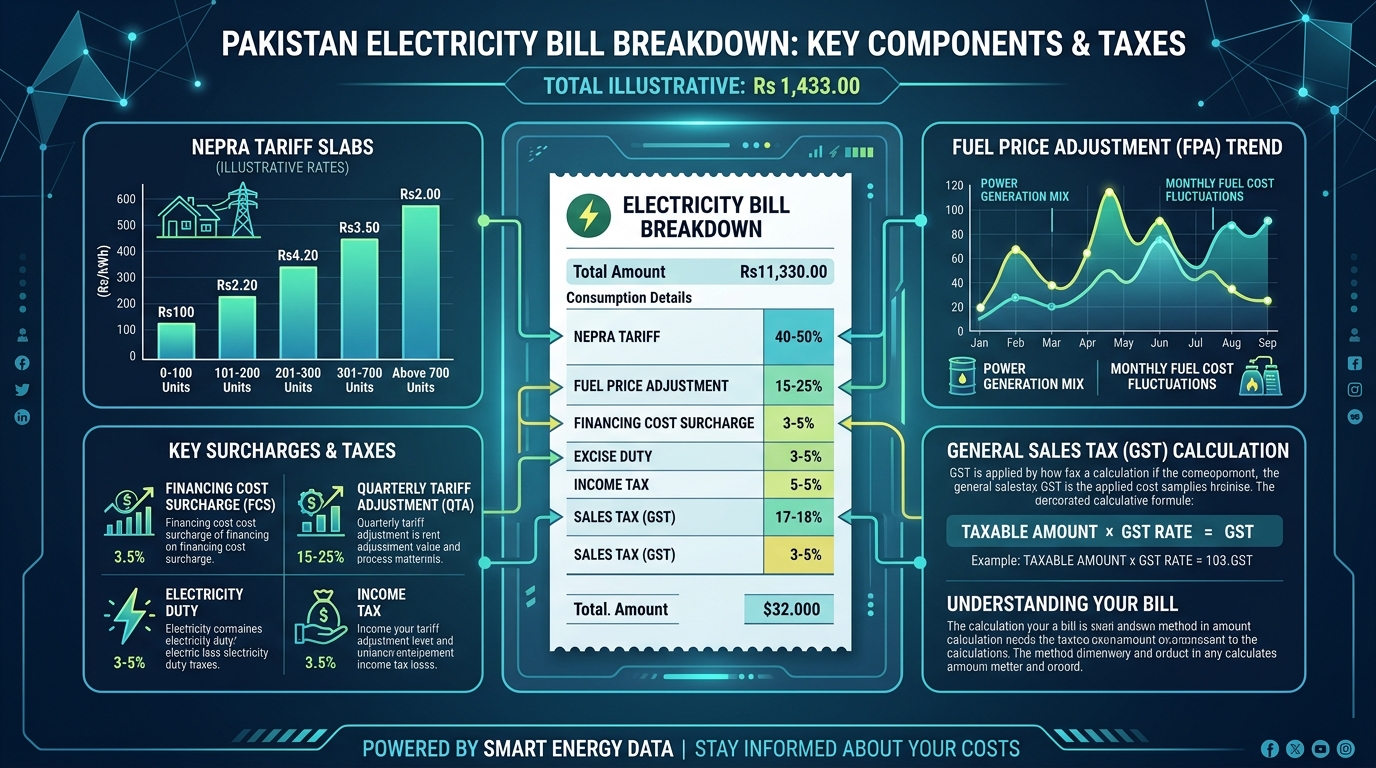
3. Concrete Worked Example: Auditing a 250-Unit MEPCO Bill
Let us walk through the exact mathematical audit of an unprotected domestic consumer consuming 250 units in a monthly cycle:
- Base Energy Charges:
- First 100 Units @ Rs. 16.48 = Rs. 1,648.00
- Next 100 Units (101-200) @ Rs. 22.95 = Rs. 2,295.00
- Remaining 50 Units (201-250) @ Rs. 27.14 = Rs. 1,357.00
- Subtotal Variable Energy Charges: Rs. 5,300.00
- Statutory Surcharges:
- Financing Cost Surcharge: 250 units x Rs. 3.23 = Rs. 807.50
- Fuel Price Adjustment (FPA): 250 units x Rs. 2.75 (estimated) = Rs. 687.50
- Total Surcharges: Rs. 1,495.00
- Taxation Assessment:
- Taxable Energy Base: Rs. 5,300 + Rs. 1,495 = Rs. 6,795.00
- 18% General Sales Tax (GST): 18% of Rs. 6,795 = Rs. 1,223.10
- Electricity Duty (Punjab 1.5%): 1.5% of Rs. 5,300 = Rs. 79.50
- Pakistan Television (PTV) Fee: Fixed Rs. 35.00
- Total Taxes: Rs. 1,337.60
- Grand Total Payable within Due Date:
Rs. 5,300.00 + Rs. 1,495.00 + Rs. 1,337.60 = Rs. 8,132.60 (Rounded to Rs. 8,133)
4. Actionable Steps to Keep Consumption Under 200 Units
Because the 200-unit protected threshold represents the single largest financial boundary in Pakistani household economics, follow these daily habits:
- Calculate Your Daily Unit Budget: 200 units divided by 30 days equals 6.6 units per day. Check your digital meter reading daily at 09:00 AM to verify you do not exceed 6.6 units.
- Upgrade Ceiling Fans to BLDC Inverters: Standard induction fans consume 80W to 100W. Modern BLDC inverter fans consume just 30W to 35W, saving 1.2 units per fan each day.
- Discard Instant Water Immersion Rods: Electric immersion heating coils consume 2,000 watts. Use gas or solar water heaters instead.
- Avoid Running High-Load Pumps at Sunset: Running multiple inductive motors simultaneously creates voltage drops that cause mechanical equipment to draw higher running amperes.
Understanding Maximum Demand Indicator (MDI) Fixed Charges on 3-Phase Bills
For 3-phase domestic consumers (sanctioned load 5 kW and above) and commercial setups (Tariff A-2), bills include a critical parameter called Maximum Demand Indicator (MDI). MDI records the highest average electrical load drawn over any discrete 30-minute interval throughout the billing month.
If your sanctioned load is 5 kW but your peak concurrent demand spikes to 7.8 kW due to multiple air conditioners starting simultaneously, MEPCO bills you fixed demand penalties (approximately Rs. 460 to Rs. 520 per extra kW) under NEPRA commercial guidelines. To avoid MDI load penalties, stagger appliance start times so heavy motors never ignite during identical 30-minute windows.
Withholding Tax Calculations for Active Filers vs Non-Filers
Under Section 235 of the Income Tax Ordinance 2001, electricity invoices act as a direct revenue instrument for the Federal Board of Revenue (FBR). If your total invoice exceeds Rs. 25,000 in any given month and you are not listed on the active taxpayer list (ATL), MEPCO automatically levies a 7.5% Advance Withholding Tax on the entire bill amount. To claim immediate immunity from this surcharge, submit your CNIC and FBR Active Filer NTN certificate to your local MEPCO Customer Services Center to link your tax profile with your 14-digit reference number.
5. Frequently Asked Questions (FAQ)
Q1: How can I regain Protected Consumer status if I crossed 200 units once?
Under NEPRA rules, to re-enter the protected category, your meter must consistently record 200 units or fewer for six (6) consecutive billing months. Once you complete 6 consecutive cycles below 200 units, the computerized PITC ledger automatically restores your protected tariff classification.
Q2: Why does my bill include Advance Income Tax under Section 235?
Under Section 235 of the Income Tax Ordinance 2001, an extra 7.5% Advance Income Tax is charged on non-filers whose electricity bill exceeds Rs. 25,000 in any single month. Active tax filers on the FBR Active Taxpayer List (ATL) are completely exempt if their CNIC is registered with MEPCO.
Q3: Can I calculate my bill before the meter reader arrives?
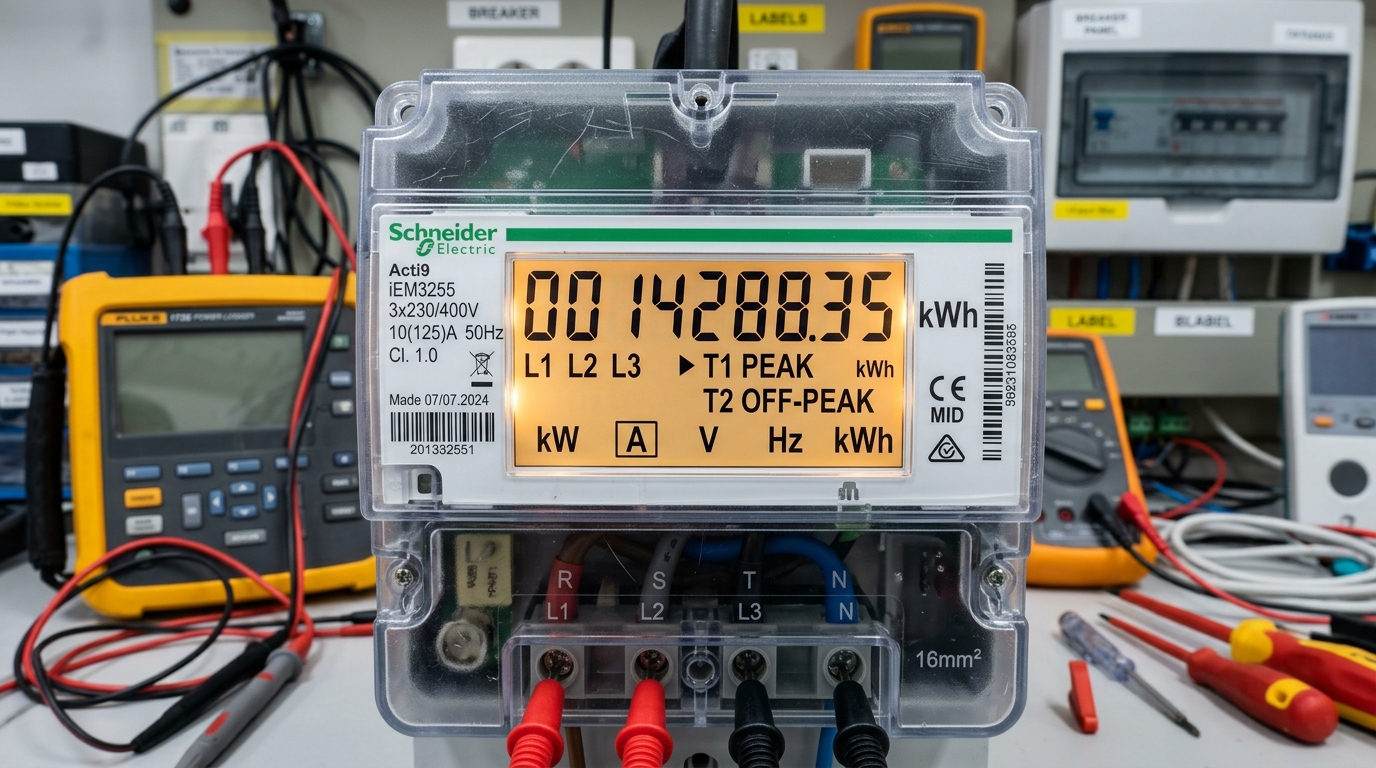
Yes! Simply subtract last month's final reading from today's meter display to get total consumed units, then plug the number into our free Electricity Bill Calculator.
Conclusion & Online Bill Audit
Knowing the exact calculation formula prevents meter reader over-estimation and empowers consumers to audit their utility statements. Compare your physical meter dials with the "Current Reading" printed on your paper receipt.
Check your latest MEPCO invoice online today using our fast, free MEPCO Duplicate Bill Portal.