3-Phase Electricity Meter Conversion in Pakistan 2026: Cost Breakdown, Demand Notice, Wiring Test Report & ENC Application
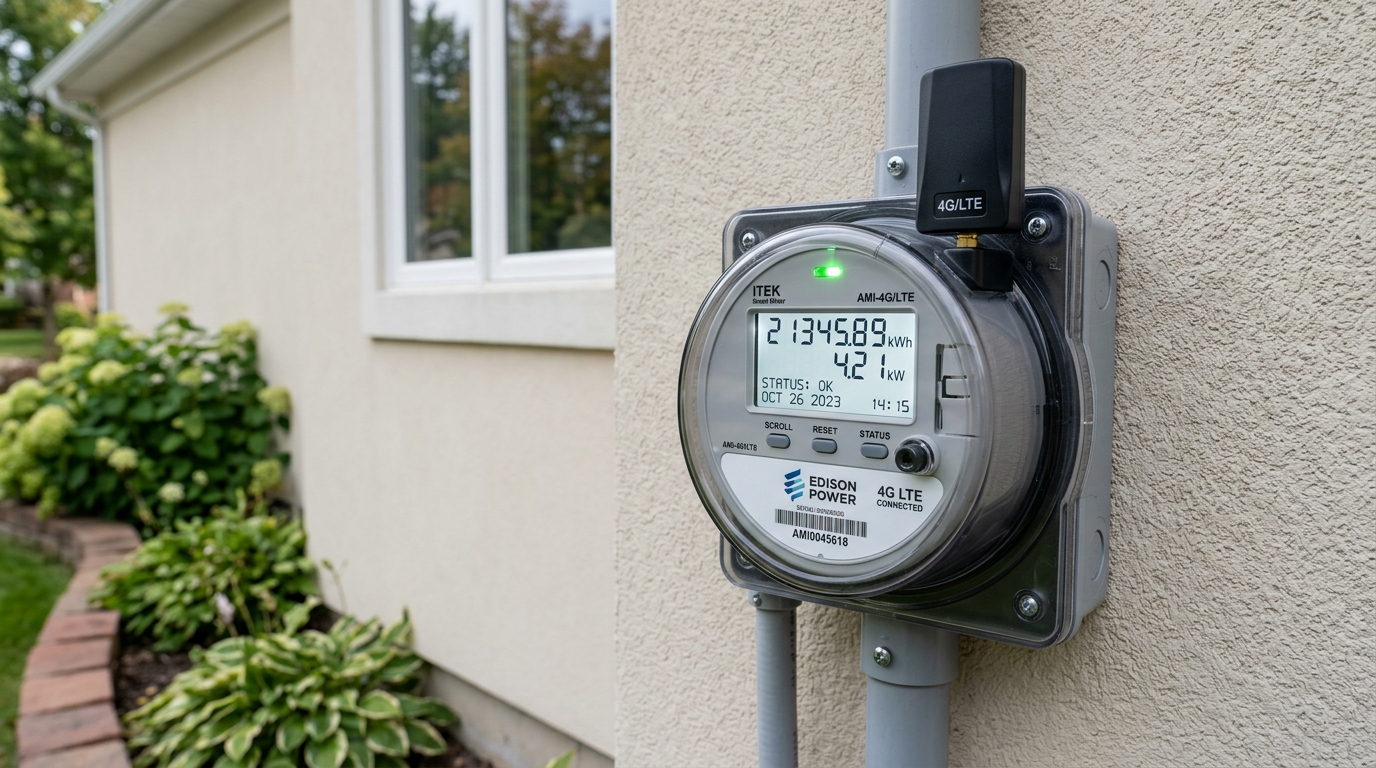
Table of Contents
- 1. Why Upgrading to a 3-Phase Connection is Essential in 2026
- 2. Master Cost Breakdown: Demand Notice, Security Deposit & Wiring Expenses
- 3. Online Application Workflow via the Centralized ENC Portal (enc.com.pk)
- 4. The Mandatory Licensed Wiring Contractor Test Report (Form A)
- 5. Site Verification by Line Superintendent (LS) & Transformer Load Audit
- 6. Technical Hardware: Static Digital 3-Phase Meters & Service Drop Cables
- 7. Phase Load Balancing: Preventing Neutral Burnout & Low Voltage Dips
- 8. Integrating 3-Phase Power with Solar Net Metering Systems
1. Why Upgrading to a 3-Phase Connection is Essential in 2026
Across urban Pakistan, residential power requirements have expanded dramatically. Modern domestic households routinely operate multiple inverter air conditioners, deep freezers, automatic washing machines, microwave ovens, water pumping motors, and electric vehicle (EV) charging units. Under NEPRA regulations, a standard Single-Phase electricity connection is legally restricted to a maximum sanctioned load of 5 Kilowatts (kW) (approximately 25 Amperes at 230 Volts).
Attempting to run a heavy residential load on an undersized single-phase connection triggers chronic main circuit breaker tripping, extreme voltage fluctuations (often plunging below 170V), overheated service drop cables, and premature motor burnout. Furthermore, for homeowners planning to install a rooftop solar system exceeding 3 kW capacity, a 3-phase connection is legally mandatory to facilitate bi-directional net metering. Upgrading to a 400V 3-phase connection provides clean, balanced, three-circuit power capable of supporting loads from 5 kW up to 40+ kW.
2. Master Cost Breakdown: Demand Notice, Security Deposit & Wiring Expenses
Upgrading an existing meter involves statutory utility fees paid to the DISCO alongside internal private electrical wiring upgrades. Below is the realistic expenditure breakdown for a standard domestic 3-phase upgrade (5 kW to 10 kW sanctioned load) in 2026:
| Expense Component | Payable To | Estimated Cost (PKR) | Description |
|---|---|---|---|
| 3-Phase Static Digital Meter | DISCO Demand Notice | Rs. 24,000 - Rs. 32,000 | Approved digital TOU dual-register meter |
| Additional Security Deposit | DISCO Demand Notice | Rs. 12,000 - Rs. 20,000 | Refundable tariff security per sanctioned kW |
| 4-Core Armored Service Drop Wire | DISCO Demand Notice | Rs. 10,000 - Rs. 16,000 | 16mm² or 25mm² 4-core aluminum/copper cable |
| Meter Testing & Labor Charges | DISCO Demand Notice | Rs. 3,500 - Rs. 6,000 | M&T laboratory calibration and installation labor |
| Licensed Electrician Wiring Certificate | Class-A Electrician | Rs. 5,000 - Rs. 10,000 | Official Form-A wiring test inspection report |
| Main 3-Phase Distribution Box & MCBs | Electrical Hardware Vendor | Rs. 18,000 - Rs. 35,000 | 4-Pole 63A main isolator, ELCB, and 3x SPDs |
| Chemical Earthing Bore (Optional) | Grounding Contractor | Rs. 20,000 - Rs. 35,000 | Dedicated low-resistance earth pit (<5 ohms) |
| Total Turnkey Conversion Budget: | Rs. 92,500 - Rs. 154,000 | ||
3. Online Application Workflow via the Centralized ENC Portal (enc.com.pk)
Gone are the days of negotiating with line staff or visiting multiple utility departments. The Ministry of Energy mandates that all new connections, load extensions, and phase conversions must be processed exclusively through the centralized Electricity New Connection (ENC) portal (enc.com.pk):
- Navigate to the ENC Portal: Open
enc.com.pkand select the 'Change of Name / Tariff / Load' module. - Select Your Distribution Company: Choose your electricity provider (LESCO, MEPCO, IESCO, FESCO, GEPCO, PESCO, HESCO, SEPCO, QESCO, or TESCO) and sub-division.
- Input Existing Account Metadata: Enter your current 14-digit numeric Reference Number. The portal retrieves your consumer name, existing single-phase meter serial, and active sanctioned load.
- Specify Desired Conversion: Select 'Conversion from Single-Phase to Three-Phase' and specify your requested new sanctioned load (e.g. 10 kW or 15 kW).
- Upload Mandatory Verification Documents:
- Scanned CNIC copy of property owner (front and back).
- Proof of property ownership (Registry, Fard, Allotment Letter, or Sale Deed).
- Latest fully paid electricity bill copy with zero outstanding arrears.
- Applicant affidavit confirming property legality on non-judicial stamp paper.
- Submit and Secure Tracking Application ID: Upon submission, the portal issues a unique tracking tracking number (e.g.,
ENC-2026-98124).
4. The Mandatory Licensed Wiring Contractor Test Report (Form A)
A critical prerequisite often overlooked by applicants is the Wiring Test Report (Form A). Under the Electricity Act 1910, a utility company cannot energize a 400V 3-phase connection without certified proof that the building internal wiring meets national electrical safety standards.
Applicants must engage an electrician holding an active Competency Certificate and Contractor License issued by the Provincial Electric Inspectorate. The contractor conducts megger insulation resistance tests, inspects the 4-pole distribution board, verifies earthing continuity, and signs the official Form-A test report, which must be submitted to the SDO office.

5. Site Verification by Line Superintendent (LS) & Transformer Load Audit
Upon digital submission, the file is routed to the local Sub-Divisional Line Superintendent (LS-1). The LS visits the physical site to verify:
- Clear access for the heavy 4-core service drop cable from the nearest low-tension (LT) pole.
- That the distribution transformer feeding the street possesses sufficient remaining capacity to support the additional 3-phase load without phase unbalancing.
- That the applicant has installed a secure, weatherproof outdoor metallic meter enclosure box.
6. Technical Hardware: Static Digital 3-Phase Meters & Service Drop Cables
Following site approval, the DISCO issues an official computerized Demand Notice. Once paid at any authorized bank branch, the utility issues a state-of-the-art 3-phase static electronic meter. These meters feature:
- Optical Communication Port: Enables automated meter reading (AMR) via hand-held optical scanning wands.
- Time of Use (TOU) Dual Registers: Segregates energy consumption into Peak and Off-Peak windows.
- Phase Sequence & Anti-Tamper Sensors: Detects reverse current flow, phase bypass, neutral disconnection, and strong external magnetic interference, logging tamper events directly into non-volatile memory.
7. Phase Load Balancing: Preventing Neutral Burnout & Low Voltage Dips
A widespread mistake made by local electricians during 3-phase conversions is dumping all heavy household loads (e.g. three air conditioners) onto a single phase while leaving the remaining two phases underutilized. This creates severe phase imbalance, causing dangerous neutral conductor overheating, high neutral-to-earth voltages, and frequent equipment failures.
Ensure your electrician divides your household circuits evenly across all three phases: Phase 1 (Red) dedicated to Bedroom 1 AC and lighting; Phase 2 (Yellow) dedicated to Bedroom 2 AC and refrigeration; Phase 3 (Blue) dedicated to the drawing room AC and water pump. Balanced phase loading ensures rock-solid 230V line-to-neutral stability across your entire home.
8. Integrating 3-Phase Power with Solar Net Metering Systems
Upgrading to a 3-phase connection is the foundational stepping stone for solar independence. Standard 3-phase on-grid solar inverters (ranging from 5 kW to 25 kW) require a synchronous 3-phase reference grid to operate. Once your 3-phase conversion is commissioned, your premises becomes immediately eligible to apply for NEPRA net metering, transforming your home from an electricity consumer into an energy producer.
Frequently Asked Questions (FAQs)
Verify Your Utility Bill Online Now
Want to check your live DISCO electricity bill or calculate your monthly cost based on your latest meter reading? Use our free, real-time tools updated with the latest 2026 NEPRA tariffs: