Solar Panel Cleaning & Maintenance Guide 2026: Dust Soiling Losses, Best Cleaning Time, Water TDS & 25% Efficiency Restoration
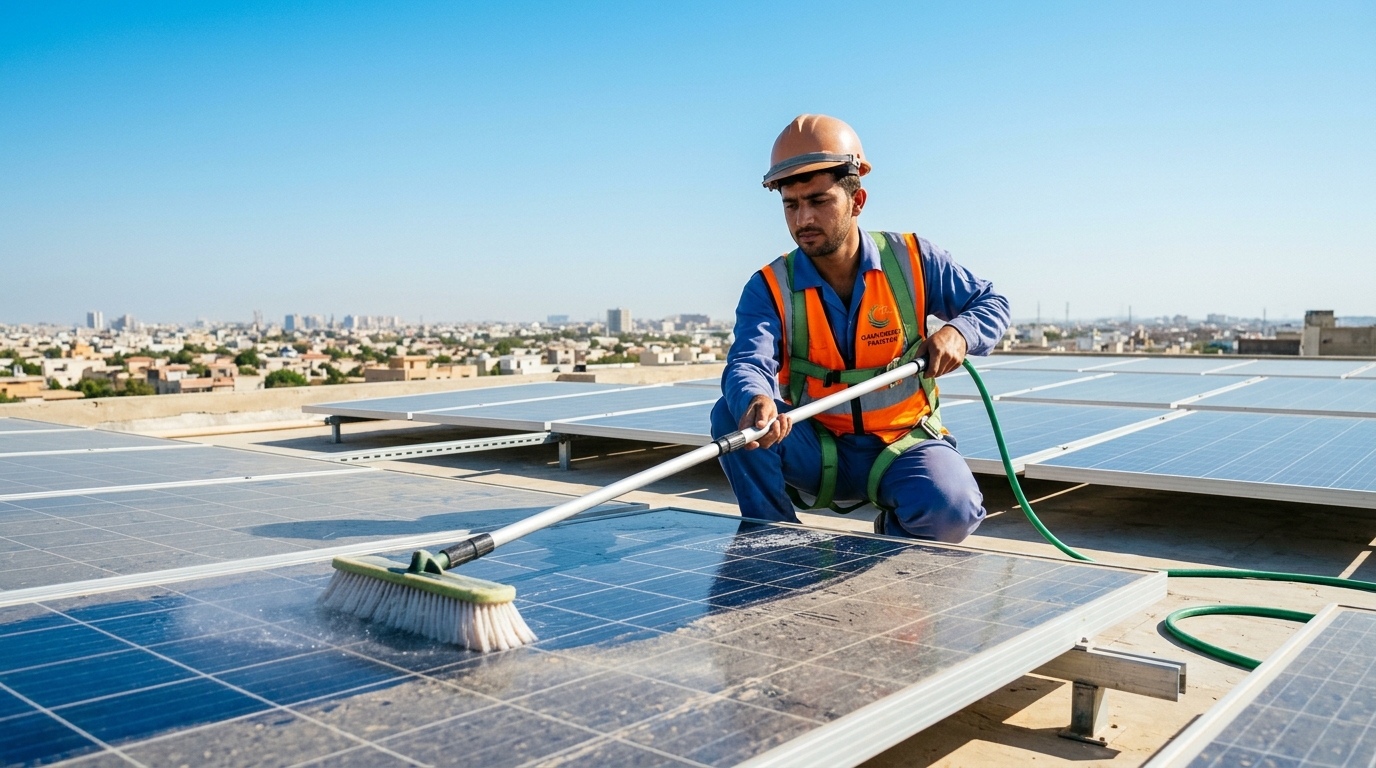
Executive Summary: Investing millions of rupees in high-efficiency Tier-1 monocrystalline half-cut or TOPCon solar panels is only half the battle. In Pakistan, severe atmospheric particulate pollution, seasonal winter smog, agricultural harvesting dust, and vehicle exhaust coat solar glass surfaces in a stubborn, sunlight-blocking film known as **Soiling**. Scientific field studies conducted in Lahore, Faisalabad, and Multan reveal that unwashed solar arrays lose between **15% to 28% of their total power output** within just three weeks of dry weather. This comprehensive technical guide outlines exact cleaning protocols, chemical safety, water quality parameters, and maintenance schedules.
Table of Contents (Jump to Section)
- 1. The True Cost of Soiling: How Dust Steals Solar Power
- 2. The Danger of Hard Water: TDS and Mineral Scaling Explained
- 3. Best Time of Day to Clean Solar Panels: Preventing Thermal Glass Shock
- 4. Step-by-Step Professional Cleaning Protocol
- 5. Recommended Cleaning Frequency Calendar in Pakistan
- 6. Frequently Asked Questions (FAQ)
1. The True Cost of Soiling: How Dust Steals Solar Power
When a microscopic layer of dust settles on the glass:
- Optical Transmission Loss: Sunlight is reflected and scattered rather than absorbed, reducing daily kilowatt-hour generation.
- Hot Spot Formation (Cell Burnout): Uneven soiling—such as bird droppings or tree leaves resting on a single cell—creates reverse current hotspots. Because that shaded cell cannot generate electricity, it acts as an electrical resistor, absorbing power from surrounding cells, heating up to 150°C, and eventually melting the EVA backsheet!
- Financial Impact: On a typical 10kW residential net metering system generating 1,400 units monthly, a 20% soiling loss forfeits 280 units—amounting to a direct monthly revenue loss of over Rs. 12,500!
2. The Danger of Hard Water: TDS and Mineral Scaling Explained
When hard tap water evaporates under blazing sunshine, it leaves behind a chalky white mineral crust (limescale) baked permanently into the microscopic pores of the solar anti-reflective glass. Over time, this mineral scale permanently destroys 10% to 15% of panel efficiency and cannot be washed off with normal water!
Water Quality Rule: Always clean panels using water with a TDS of **less than 100 PPM** (ideally RO filtered water, distilled water, or collected AC condensate drain water).
3. Best Time of Day to Clean Solar Panels: Preventing Thermal Glass Shock
During summer afternoons, solar panel tempered glass heats up to 65°C to 75°C. Spraying cold 20°C groundwater onto boiling glass causes extreme **Thermal Shock**, which can instantly shatter the tempered glass or produce microscopic internal silicon cell fractures that destroy warranty claims.
The Ideal Cleaning Windows:
- Early Morning (6:00 AM to 8:00 AM): Ambient air is cool, night dew has softened dust crusts, and thermal shock risk is zero.
- Late Evening / Dusk (6:30 PM onward): Panels have cooled down completely after sunset, allowing safe washing without evaporation water spots.
4. Step-by-Step Professional Cleaning Protocol
- Dry Dust Dusting First: Use an electrostatic microfiber extendable pole mop to gently sweep loose, dry dust off the glass before introducing water.
- Low-Pressure Water Rinse: Rinse the surface using a low-pressure garden hose (maximum 2 to 3 bar). Never use high-pressure commercial car wash pressure washers! Extreme jet pressure damages silicone edge seals and forces water past IP68 junction boxes.
- Non-Abrasive Cleaning Tool: Use a specialized ultra-soft telescopic solar wash brush with dual water nozzles. Never use abrasive wire wool, stiff kitchen scrubbers, or dry rags that scratch anti-reflective coatings.
- Zero Harsh Chemicals: Never apply corrosive toilet cleaners, bleach, acids, or harsh laundry detergents. Use plain RO water or a specialized pH-neutral solar cleaning solution.
- Squeegee Dry: Use a soft silicone rubber squeegee blade to wipe remaining water droplets clean, preventing mineral spotting.
5. Recommended Cleaning Frequency Calendar in Pakistan
- Urban & Main Road Locations (Lahore, Karachi, Faisalabad): Clean every 7 to 10 days due to heavy vehicular exhaust and diesel soot.
- Severe Winter Smog Season (November to January): Clean every 5 to 7 days. Smog particles contain acidic sulfur and oily soot that bond stubbornly to glass.
- Rural / Sub-Urban Locations: Clean every 14 to 20 days.
6. Frequently Asked Questions (FAQ)
Q1: Does rain clean solar panels effectively?
Light rainfall in Pakistan actually worsens soiling by turning airborne dust into sticky mud smears that bake onto the glass once the sun reappears. Only heavy, prolonged tropical downpours provide effective rinsing.
Q2: Can I walk or step on solar panels while cleaning?
NEVER step on solar panels! Human body weight flexes the tempered glass, causing catastrophic internal silicon micro-cracks that are invisible to the naked eye but permanently destroy cell conductivity.
Need to check or calculate your current utility bill?
Verify your electricity, gas, or water duplicate bill online or calculate unit slabs with accurate real-time formulas.