Washing Machine vs Dryer Power Consumption in Pakistan 2026: Automatic, Semi-Automatic & Gas Dryer Electricity Cost | BillsOnlinePk
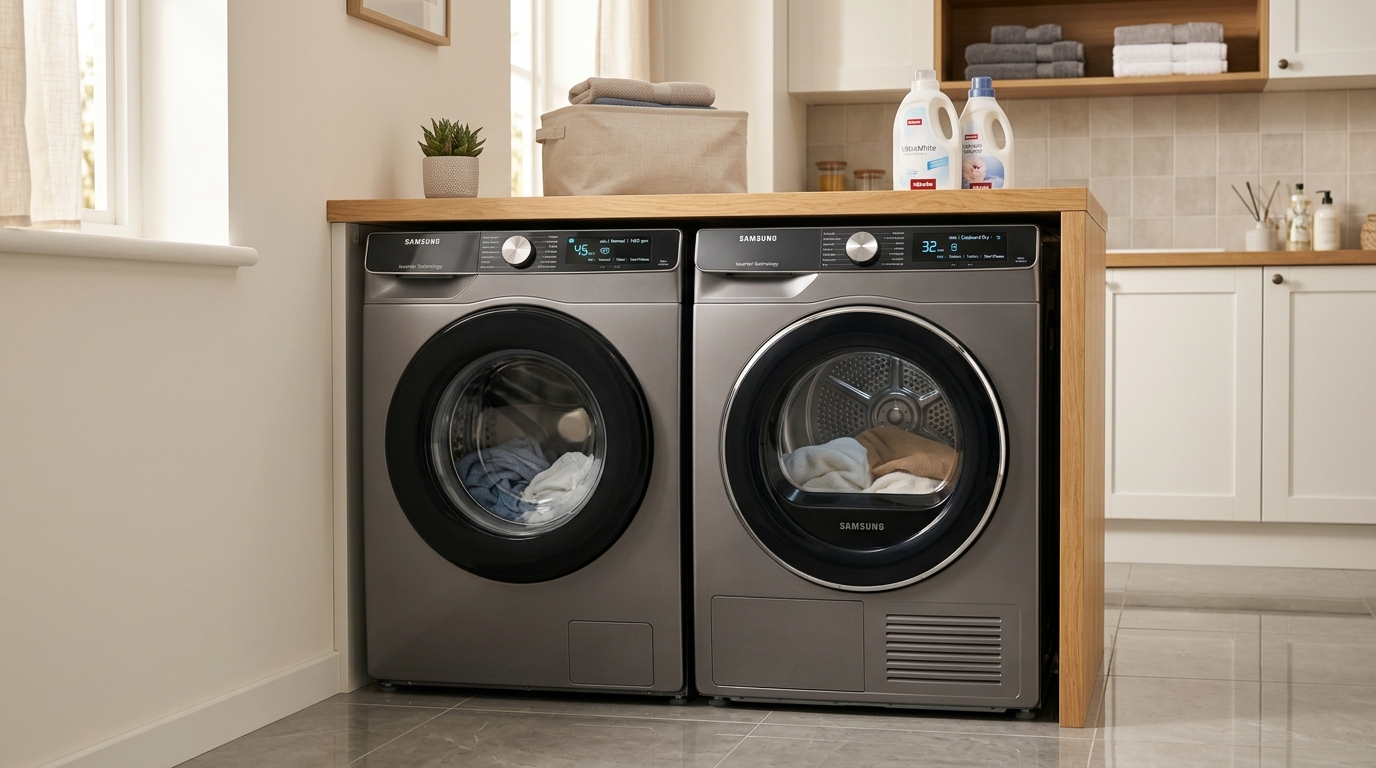
Executive Summary: Laundry care is one of the most frequent yet misunderstood contributors to domestic electricity bills in Pakistani households. With modern automatic washing machines, twin-tub semi-automatic washers, and standalone tumble dryers becoming household staples across Lahore, Karachi, Islamabad, and Faisalabad, consumers face dramatic differences in monthly utility expenditure. With electricity tariffs in Pakistan exceeding Rs. 55 to Rs. 68 per unit in higher non-protected consumption slabs, running heavy heating and motor appliances without thermodynamic awareness can easily inflate monthly bills by Rs. 8,000 to Rs. 15,000. This 2026 engineering manual provides exact wattage breakdowns, motor efficiency comparisons, inverter vs non-inverter power draw, and real-world monthly bill calculation models for Pakistani families.
Table of Contents (Jump to Section)
- 1. Motor Architecture: Direct-Drive Inverter vs Belt-Drive Induction Motors
- 2. The Hidden Power Hog: Built-in Water Heaters vs Cold Wash Cycles
- 3. Clothes Dryers: Electric Vented vs Heat Pump vs Gas Dryers in Pakistan
- 4. Twin-Tub Semi-Automatic vs Fully Automatic: Comprehensive Comparison
- 5. Real-World Monthly Bill Impact: Pakistani Family Case Study (5 Members)
- 6. Grid Protection, Voltage Sags & Earthing Safety Standards in Pakistan
- 7. Frequently Asked Questions (FAQ)
1. Motor Architecture: Direct-Drive Inverter vs Belt-Drive Induction Motors
The heart of every washing machine is its electric drive motor. In Pakistan, the market is divided between legacy belt-driven universal/induction motors and modern Direct Motion (Direct Drive BLDC) inverter motors:
- Belt-Drive Induction Motors (Conventional Twin-Tub & Budget Automatics): Conventional washing machines use a belt and pulley system to transfer rotational torque from a fixed-speed AC induction motor to the wash pulsator. This mechanical transmission suffers 18% to 25% energy loss due to belt friction and slippage. Furthermore, induction motors draw high starting surge currents (3x to 5x nominal run current) every time the agitator reverses direction, consuming 350W to 500W continuously.
- Direct Motion Inverter BLDC Motors (Premium Front-Load & Top-Load Automatics): Modern inverter washing machines (manufactured by Haier, Dawlance, Samsung, LG, and Panasonic) mount a Brushless DC (BLDC) motor directly onto the central axis of the drum, completely eliminating belts, pulleys, and gearboxes. Controlled by Pulse Width Modulation (PWM) variable frequency drives, the motor accelerates smoothly with near-zero starting surge, drawing only 120W to 220W during normal wash rotation.
Over an average family's annual laundry schedule (approx. 260 wash cycles per year), an inverter direct-drive motor saves between 75 and 110 electricity units purely through mechanical and motor transmission efficiency.
2. The Hidden Power Hog: Built-in Water Heaters vs Cold Wash Cycles
A widespread misconception among Pakistani consumers is that the rotating drum motor consumes the bulk of an automatic washing machine's electricity. In reality, the electric heating element consumes over 85% to 90% of total cycle electricity.
When you select a hot wash cycle (e.g., 60°C or 90°C intensive wash for bedsheets or baby clothes), the internal immersion heating element (rated at 1,800 Watts to 2,200 Watts) energizes for 35 to 55 minutes until the water reaches target temperature:
| Wash Temperature Setting | Heating Element Status | Total Cycle Duration | Electricity Units Consumed (kWh) | Cost per Wash Cycle (@ Rs. 58/Unit) |
|---|---|---|---|---|
| Cold Tap Water (25°C) | OFF (0 Watts) | 45 Minutes | 0.15 - 0.22 kWh | Rs. 8.70 - Rs. 12.75 |
| Warm Wash (40°C) | Active (1,800W for 20 mins) | 60 Minutes | 0.85 - 1.10 kWh | Rs. 49.30 - Rs. 63.80 |
| Hot Hygienic Wash (60°C) | Active (2,000W for 40 mins) | 75 Minutes | 1.80 - 2.30 kWh | Rs. 104.40 - Rs. 133.40 |
| Sanitize Boil Wash (90°C) | Active (2,000W for 55 mins) | 90 Minutes | 2.80 - 3.40 kWh | Rs. 162.40 - Rs. 197.20 |
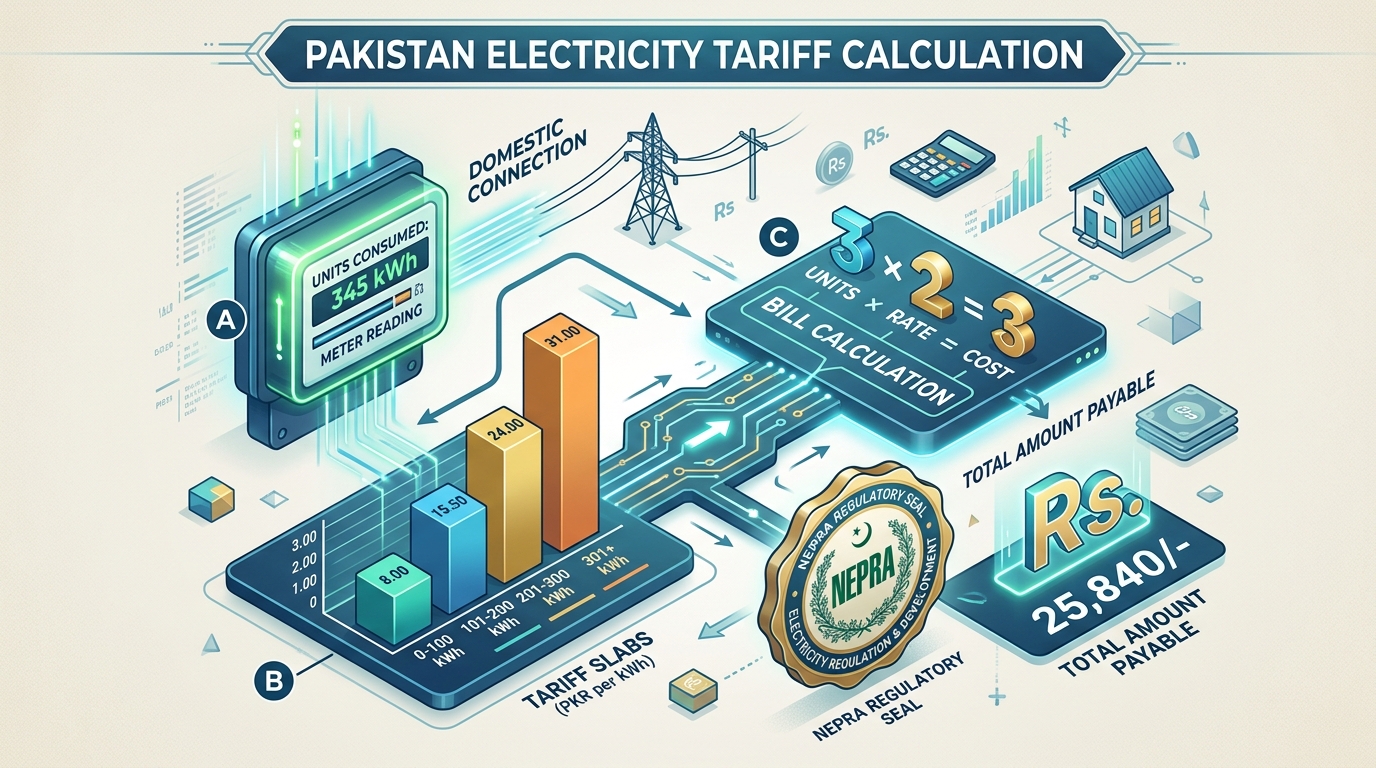
Running a single daily hot wash at 60°C adds approximately 60 to 70 electricity units (kWh) per month to your MEPCO, LESCO, or K-Electric bill—costing over Rs. 3,500 to Rs. 4,200 monthly just for hot water heating in the washing machine.
3. Clothes Dryers: Electric Vented vs Heat Pump vs Gas Dryers in Pakistan
While Pakistani households have historically relied on natural sunlight and outdoor clotheslines for drying laundry, urban apartments, winter smog periods in Lahore, and monsoon seasons have driven rapid adoption of mechanical clothes dryers. Understanding dryer thermodynamic technologies is essential to preventing utility bill shock:
- Electric Vented Dryers (2,000W to 2,800W): Traditional tumble dryers pull ambient room air, pass it across an open electric heating coil, blow the superheated air through tumbling clothes, and vent the moist exhaust outside through a flexible foil duct. Because all heat is vented and lost continuously, drying a single 8kg load takes 60 to 90 minutes and consumes 2.5 to 3.8 electricity units (kWh), costing Rs. 150 to Rs. 230 per load.
- Electric Heat Pump Condenser Dryers (700W to 900W): Heat pump dryers utilize a closed-loop refrigeration compressor circuit (similar to an air conditioner operating in reverse). Instead of dumping hot humid air outside, the system cools the moist air across evaporator coils to condense moisture into a collection tank, then reheats the dry air across condenser coils. Because heat is recycled within a closed loop, energy consumption is reduced by 60% to 70%, requiring only 0.9 to 1.3 kWh per drying cycle.
- Natural Gas Tumble Dryers: Gas-heated dryers burn Sui gas (SNGPL/SSGC) to produce drying heat while using a minor 200W electric motor to tumble the drum. Where gas pressure is reliable, gas dryers are 75% cheaper to run than electric vented dryers. However, in modern urban Pakistan where winter gas loadshedding is prevalent, gas dryers frequently require LPG cylinders, substantially altering operating economics.
4. Twin-Tub Semi-Automatic vs Fully Automatic: Comprehensive Comparison
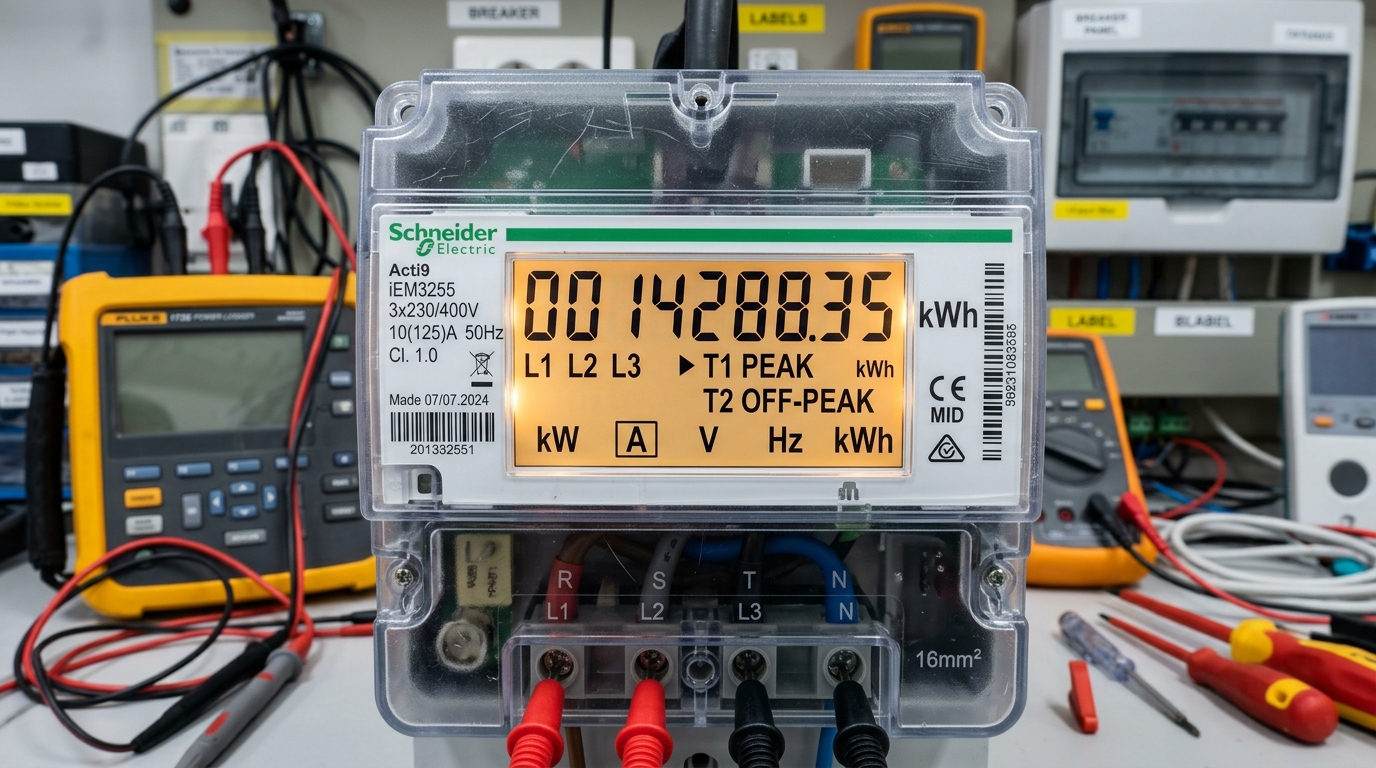
The twin-tub semi-automatic washing machine remains Pakistan's highest-selling laundry appliance due to low purchase cost and rugged tolerance for low water pressure and voltage fluctuations. Here is how it compares technologically and operationally against fully automatic machines:
| Feature Parameter | Twin-Tub Semi-Automatic | Top-Load Fully Automatic | Front-Load Fully Automatic |
|---|---|---|---|
| Motor Technology | Twin AC Induction Motors (Wash + Spin) | Single BLDC Inverter or Induction Motor | Direct Drive Inverter BLDC Motor |
| Typical Wash Motor Wattage | 350W - 450W | 300W - 480W | 150W - 250W (Motor only) |
| Centrifugal Spin Dryer Wattage | 160W - 220W (5 min spin) | Integrated in drum (600 - 800 RPM) | Integrated in drum (1200 - 1400 RPM) |
| Water Consumption per Load | 80 - 120 Liters (Manual fill) | 120 - 160 Liters (Automatic level) | 45 - 65 Liters (High water saving) |
| Electricity per Normal Cycle | 0.12 - 0.18 kWh | 0.20 - 0.35 kWh | 0.18 - 0.28 kWh (Cold wash) |
| Residual Moisture After Spin | ~60% - 65% moisture | ~55% - 60% moisture | ~40% - 48% (Much faster line drying) |
Front-load machines extract substantially more water during high-speed 1,400 RPM spin cycles, cutting subsequent outdoor line drying or mechanical dryer running times by almost half.
5. Real-World Monthly Bill Impact: Pakistani Family Case Study (5 Members)
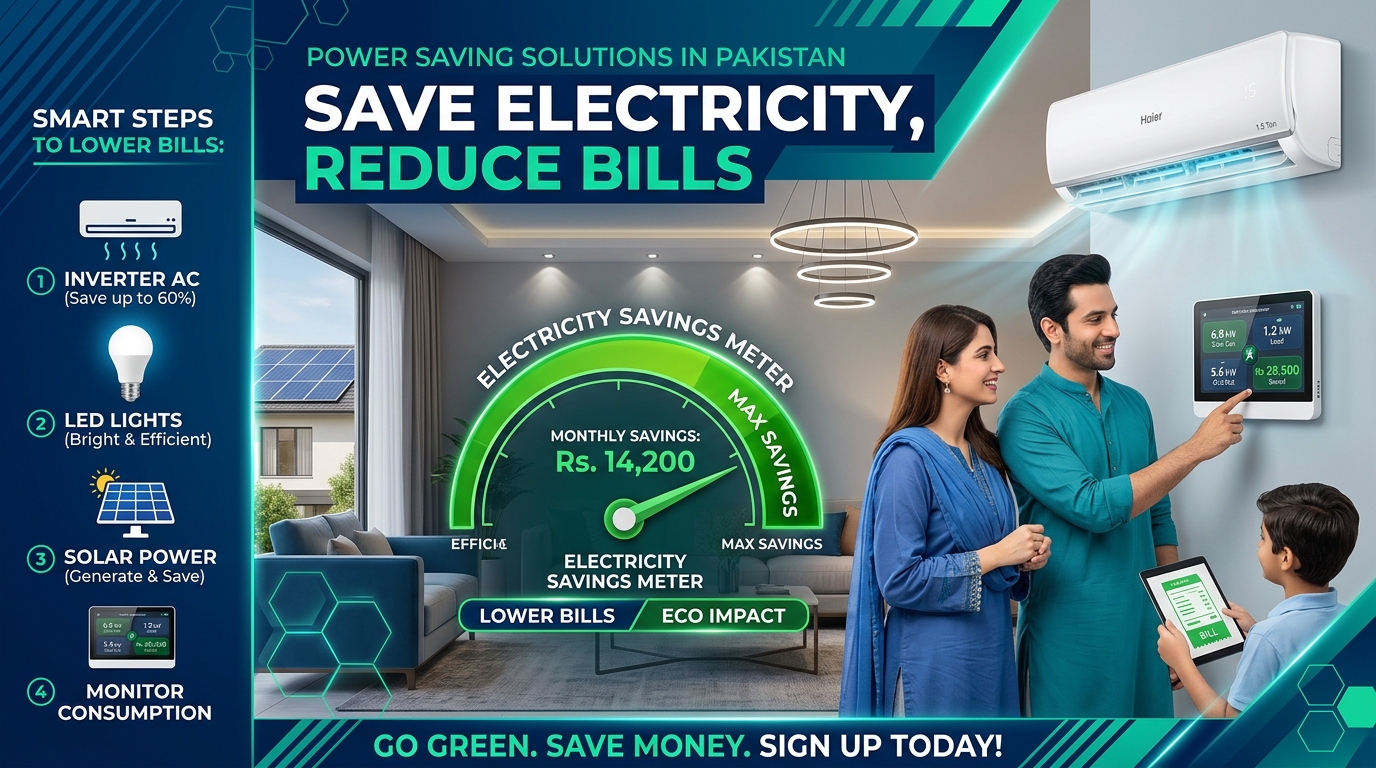
To illustrate the financial realities of laundry habits under Pakistan's 2026 domestic tariff structure, let us evaluate an average family of 5 individuals doing 20 laundry loads per month across three distinct appliance configurations:
- Scenario A (Budget Setup): Twin-tub semi-automatic washer + outdoor sun line drying. Total monthly electricity consumed: 3.6 units (kWh). Monthly utility cost: Rs. 210.
- Scenario B (Standard Automatic with Cold Wash): 9kg Top-load inverter automatic washer + outdoor line drying. Total monthly electricity consumed: 6.5 units (kWh). Monthly utility cost: Rs. 380.
- Scenario C (High-End Heated Setup): 10kg Front-load washer (with 60°C hot water cycle) + Electric vented tumble dryer for all loads. Washer consumes 40 units + Dryer consumes 65 units = 105 units (kWh). Monthly utility cost (@ Rs. 62/unit in slab 301-700): Rs. 6,510 per month.
Simply switching from hot water wash cycles to cold tap water washing and utilizing natural Pakistani sunshine for clothes drying saves over Rs. 70,000 annually per household.
6. Grid Protection, Voltage Sags & Earthing Safety Standards in Pakistan
In Pakistani residential distribution networks, washing machines are frequently installed in wet utility areas, verandas, or rooftop laundry rooms. These damp environments dramatically amplify electrical shock hazards if proper earthing and breaker protections are omitted:
- Dedicated 30mA Residual Current Circuit Breaker (RCCB): Because water lines, metal drum bearings, and drainage pipes form direct conductive pathways, every washing machine circuit must be protected by a high-sensitivity 30mA RCCB. In the event of motor coil insulation failure, the breaker interrupts mains voltage within 30 milliseconds, preventing fatal electrocution.
- Three-Pin Polarized Grounding Plugs: Never bypass the third grounding prong on your machine's power plug. The chassis ground must bond directly to your household earth pit with electrical resistance under 5.0 ohms. Un-earthed washing machines in Pakistan frequently produce tingling static shocks on wet tiles.
- Voltage Sag and Surge Protection: Direct-drive inverter motherboards contain sensitive microcontrollers and power MOSFETs. In areas with notorious voltage drops (where summer voltage drops to 160V - 180V during heavy transformer loading), install an automatic digital voltage protector with high/low voltage cut-off (cut-off below 175V and above 260V with 3-minute delay timer).
7. Frequently Asked Questions (FAQ)
How many electricity units does a fully automatic washing machine use per wash?
On a standard cold-water wash cycle, a modern inverter automatic washing machine consumes only 0.18 to 0.25 electricity units (kWh) per cycle, costing approximately Rs. 10 to Rs. 16 per wash. However, if the built-in water heater is activated at 60°C, consumption jumps to 1.8 to 2.2 units (Rs. 100 to Rs. 135 per wash).
Does an inverter washing machine really save electricity in Pakistan?
Yes. An inverter washing machine saves 30% to 45% electricity on drum rotation compared to older non-inverter belt-drive models. More importantly, inverter motors generate less mechanical vibration, operate silently, and allow precise water level sensing.
Is an electric clothes dryer worth buying in Pakistan?
If you live in a foggy or smog-heavy area in winter (such as Lahore or Gujranwala) or lack outdoor clothesline space, a heat-pump electric dryer is the most energy-efficient choice, consuming 65% less electricity than traditional vented dryers.
Can I run an automatic washing machine on a solar UPS or inverter?
Yes. On cold wash mode, an inverter washing machine draws only 200W to 350W peak, which runs comfortably on any 1kVA or 1.5kVA solar UPS or hybrid inverter. However, ensure the internal water heater is turned off, as a 2,000W heating element will overload smaller inverters.
Need to check or calculate your current utility bill?
Verify your electricity duplicate bill with instant photo-reading verification or calculate slab costs accurately.