Single Phase to Three Phase Meter Conversion Cost in Pakistan 2026: Demand Notice & Wiring Guide | BillsOnlinePk
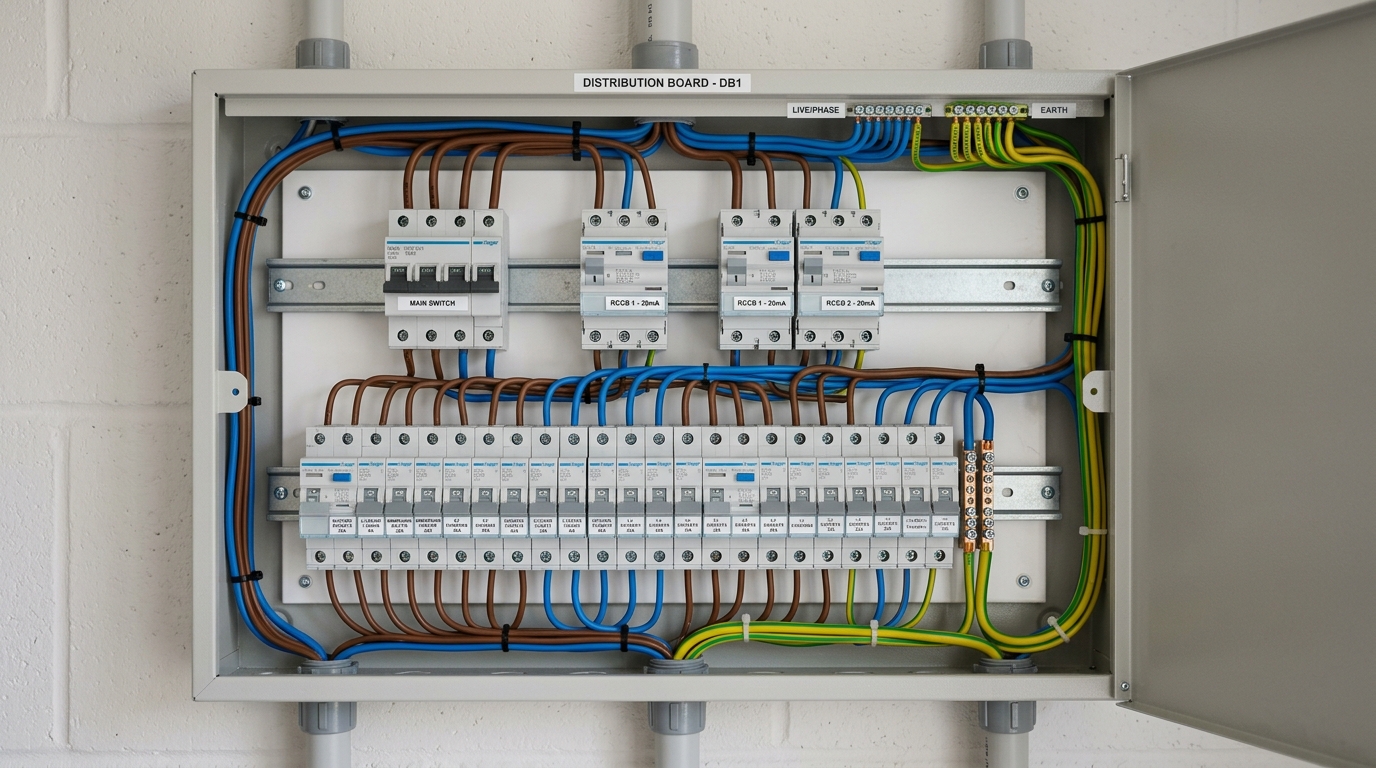
Executive Summary: As Pakistani living standards modernize and domestic homes install multiple 1.5-ton inverter air conditioners, electric water geysers, automatic washing machines, and rooftop solar net metering systems, single-phase 230V electricity meters rapidly reach their physical thermal limits. In cities like Lahore, Rawalpindi, Multan, Faisalabad, and Karachi, running 2 or more air conditioners simultaneously on a single-phase connection causes frequent main breaker tripping, severe voltage sags, burnt neutral service drop cables, and equipment failure. Converting your connection to a modern 400V Three-Phase 4-wire meter is the only engineered solution to achieve phase load balancing and qualify for NEPRA solar net metering. This comprehensive 2026 manual covers the complete conversion process, official Demand Notice fee schedules, 4-core cable sizing, and internal distribution board wiring.
Table of Contents (Jump to Section)
- 1. Why Upgrade? Single-Phase Capacity Limits vs Three-Phase Architecture
- 2. Official Conversion Procedure: Step-by-Step Application Roadmap
- 3. Demand Notice Costs & Fee Breakdown in Pakistan (2026 Schedule)
- 4. Internal Distribution Board (DB) Engineering & Phase Balancing
- 5. Tariff Slabs & Billing Differences: Single-Phase vs Three-Phase
- 6. Low-Resistance Earthing Pit & Lightning Surge Protection
- 7. Frequently Asked Questions (FAQ)
1. Why Upgrade? Single-Phase Capacity Limits vs Three-Phase Architecture
To understand why upgrading to a 3-phase connection is necessary, we must analyze the electrical limitations of a single-phase supply:
- Single-Phase 230V Physical Limits: Standard single-phase residential meters are rated for a continuous current of 30 to 40 Amperes, corresponding to an absolute maximum connected load of approximately 7 to 9 Kilowatts. A single 1.5-ton air conditioner draws 6A to 9A, a water pump draws 6A, an electric geyser draws 10A, and an iron draws 8A. When multiple appliances run simultaneously, total current surpasses 40 Amps, causing the incoming 7/0.052 copper service wire to overheat, drop voltage below 170V, and melt meter terminal blocks.
- Three-Phase 400V Architecture: A three-phase 4-wire supply delivers three distinct alternating phase conductors (L1-Red, L2-Yellow, L3-Blue) and a shared Neutral (Black). Voltage between any individual phase and neutral is 230V AC, while line-to-line voltage between any two phases is 400V AC. A standard 3-phase residential meter handles 40 Amps per phase, expanding your home's total power capacity to over 25 to 30 Kilowatts.
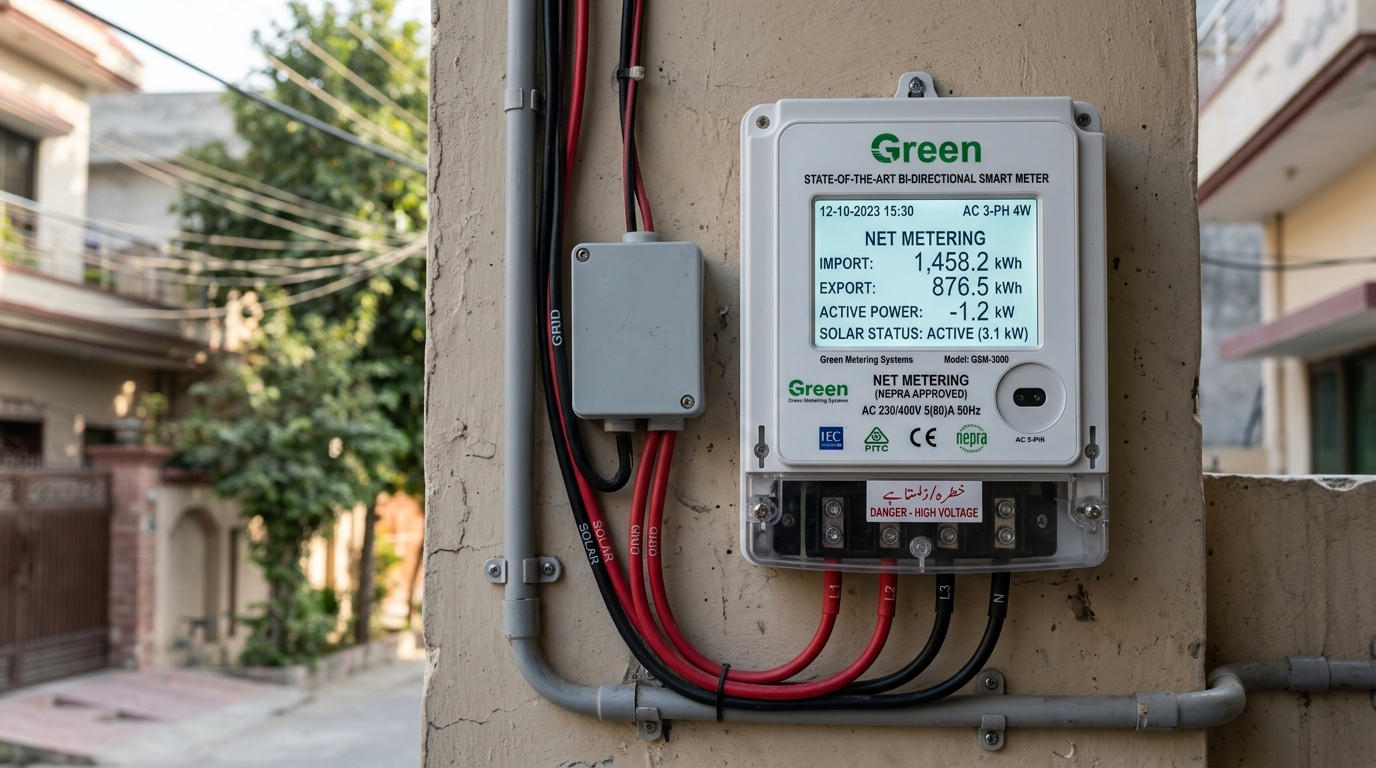
- Mandatory Requirement for Solar Net Metering: Under NEPRA Net Metering Regulations, all grid-tied bi-directional green meters for solar systems exceeding 3kW require a three-phase connection. Single-phase net metering is not permitted on Pakistani DISCO grids.
2. Official Conversion Procedure: Step-by-Step Application Roadmap
Converting your meter from single-phase to three-phase follows the official DISCO load extension procedure:
- Step 1: Online Application on the ENC Portal: Visit the official Electricity New Connection (ENC) portal at
enc.com.pk. Select "Change of Category / Load Extension / Phase Conversion." Enter your 14-digit reference number found on your current electricity bill. - Step 2: Documentation Upload: Upload scanned copies of the property owner's CNIC, verified property ownership document (Registry, Fard, or Allotment Letter), an attested Wiring Test Report prepared by a licensed electrical contractor, and the latest paid electricity bill.
- Step 3: Site Inspection by Line Superintendent (LS): The local sub-division LS visits your premises to verify the connected load, inspect internal distribution wiring, and check the nearest distribution transformer's capacity margin.
- Step 4: Demand Notice Issuance: Once approved by the Sub-Divisional Officer (SDO) or Executive Engineer (XEN), the system generates an official Demand Notice detailing conversion fees and security deposits.
3. Demand Notice Costs & Fee Breakdown in Pakistan (2026 Schedule)
The total financial cost of a 3-phase meter conversion comprises official DISCO charges and private hardware/wiring expenses:
| Expense Category | Typical Cost Range (Pakistani Rupees) | Payment Authority |
|---|---|---|
| Three-Phase Static Electronic Meter Cost | Rs. 22,000 - Rs. 28,000 | Paid via official Demand Notice (NBP/BOP) |
| Additional Sanctioned Load Security Deposit | Rs. 1,500 - Rs. 2,500 per kW extended | Paid via official Demand Notice |
| DISCO Service Connection / Transformer Share Fee | Rs. 4,000 - Rs. 8,000 | Paid via official Demand Notice |
| Licensed Wiring Test Contractor Certificate | Rs. 3,000 - Rs. 5,000 | Paid to licensed electrical contractor |
| 4-Core Armored Service Drop Cable (16mm² Cu, 20-30 Meters) | Rs. 18,000 - Rs. 26,000 | Purchased by consumer (Pakistan Cables, Fast, etc.) |
| Three-Phase Main Distribution Board (4-Pole Breakers + RCCB) | Rs. 15,000 - Rs. 25,000 | Internal household electrical upgrade |
| Total Estimated Conversion Investment | Rs. 63,500 - Rs. 94,500 | Complete turnkey conversion |
4. Internal Distribution Board (DB) Engineering & Phase Balancing
Simply replacing the outdoor meter with a 3-phase unit while leaving internal single-phase wiring unchanged is dangerous. A complete internal distribution board overhaul is mandatory:
- Phase Balancing Architecture: Divide your household circuits equally across all three incoming phases (L1, L2, L3) to maintain balanced transformer loading:
- Phase L1 (Red Phase): Dedicated to Ground Floor Air Conditioners + Kitchen 16A Power Sockets.
- Phase L2 (Yellow Phase): Dedicated to First Floor Air Conditioners + Water Pump (1.5HP) + Deep Freezer.
- Phase L3 (Blue Phase): Dedicated to All Household Lighting + BLDC Fans + Master Bedroom AC + Home Office.
- Four-Pole Main Isolator (4P MCB): Install a 4-pole miniature circuit breaker rated at 40A or 63A that cuts all three live phases AND the neutral line simultaneously during emergency shutdowns.
- Four-Pole Residual Current Circuit Breaker (RCCB): Install a 40A 30mA 4-pole RCCB to detect ground faults across any phase, protecting family members from electrocution.
- Phase Selector Manual / Automatic Changeover: In areas with erratic phase voltage (where one utility phase drops to 140V while others stay at 220V), install digital Phase Selectors that automatically route critical single-phase loads (refrigerator, lights, fans) to whichever phase delivers healthy voltage.
5. Tariff Slabs & Billing Differences: Single-Phase vs Three-Phase
A frequent concern among homeowners is whether converting to a 3-phase meter increases their electricity unit tariff:
- Identical Residential Unit Rates: For standard residential consumption under 5kW sanctioned load, electricity tariff slabs (under NEPRA Tariff A-1) are identical for both single-phase and three-phase meters. You pay the exact same base unit rate, fuel price adjustments (FPA), and quarterly surcharges.
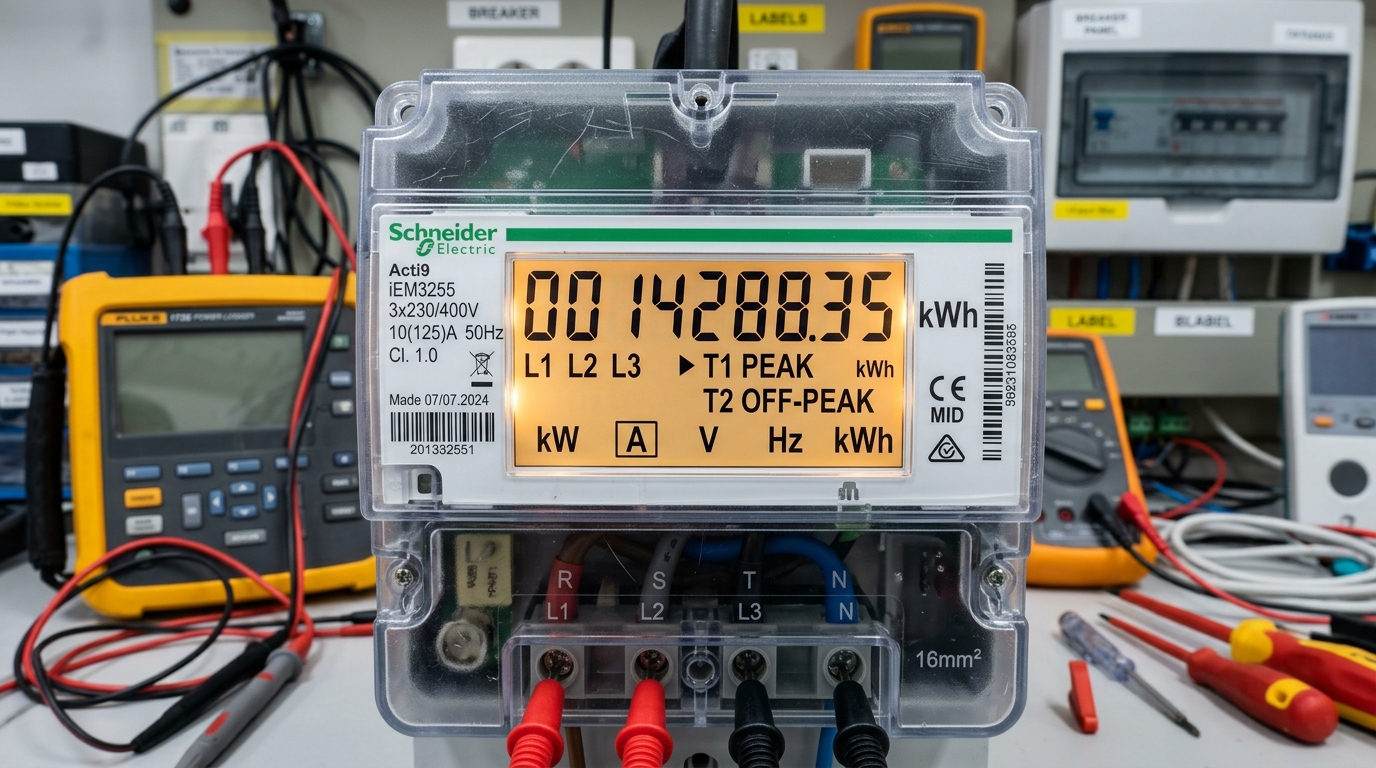
- Time of Use (TOU) Metering Above 5kW: If your sanctioned load is extended to 5kW or higher, DISCO regulations mandate the installation of a Time of Use (TOU) digital meter. TOU meters split your billing into "Peak Hours" (e.g. 5:00 PM to 10:00 PM) with higher tariff rates and "Off-Peak Hours" with substantially cheaper unit rates. Homeowners who shift heavy loads (water pumping, clothes washing, EV charging) into off-peak hours often achieve lower monthly bills than single-phase flat-rate billing!
6. Low-Resistance Earthing Pit & Lightning Surge Protection
Three-phase electrical systems carry higher fault currents and require engineered grounding:
- Dedicated Copper Earth Pit: Drive a 10-foot, 5/8-inch copper-bonded steel earth rod into deep soil. Surround the rod with an electrolytic bentonite clay and chemical salt mixture to maintain soil conductivity year-round. Combined earth resistance must measure strictly under 5.0 ohms.
- Class II 3-Phase Surge Protective Device (SPD): Install a 4-pole 40kA Type 2 surge arrestor inside the main distribution panel to divert utility lightning strikes and inductive transformer switching spikes harmlessly into the earth pit before reaching domestic electronics.
7. Commercial Sub-Metering & Multi-Tenant Rental Property Partitioning
In multi-story residential homes across Pakistani cities where upper floors are rented out to tenants or shared among joint family brothers, installing a single 3-phase meter without proper internal sub-distribution creates bitter monthly billing disputes. When all three floors draw power from a single 3-phase meter, combined household consumption routinely surpasses 700 to 1,200 units monthly, pushing the entire house into the maximum non-protected electricity tariff slab (Rs. 65+ per unit with peak taxes).
Rather than sharing a single 3-phase connection, property owners should evaluate applying for independent separate single-phase or three-phase meters for each floor via the ENC portal under "Multi-Portion Domestic Metering." By splitting 1,200 total monthly units across three separate meters (400 units per meter), each floor stays within lower protected or semi-protected tariff brackets, saving over Rs. 35,000 in combined monthly electricity bills for the family.
7. Frequently Asked Questions (FAQ)
How long does it take to convert a single-phase meter to three-phase in Pakistan?
The official process typically takes 15 to 25 working days from online ENC application submission to physical meter installation by the DISCO squad.
Can I run a single-phase air conditioner on a three-phase connection?
Yes! A three-phase connection provides three independent 230V phase lines. Your single-phase air conditioners, refrigerators, and fans connect between any single live phase and the shared neutral wire.
Is a three-phase meter mandatory for solar net metering?
Yes. Under NEPRA regulations across MEPCO, LESCO, IESCO, and other DISCOs, solar net metering (green meter) is exclusively permitted on three-phase connections.
Does a three-phase meter increase my monthly electricity bill?
No. Base electricity unit rates are identical. In fact, by eliminating voltage drops and balancing electrical currents across three phases, wiring heat losses decrease, improving overall appliance efficiency.
Q5: What copper wire gauge is required between the 3-phase meter and internal distribution board?
For standard residential loads up to 15kW, install 4-core 16mm² (7/0.064) armored copper cable. For loads exceeding 20kW, upgrade to 25mm² copper cable to prevent voltage drop and excessive cable heating.
Q6: Can I apply for 3-phase conversion if my electricity bill has arrears?
No. The DISCO billing system blocks ENC load extension applications if unpaid arrears exist. You must clear all pending dues before submitting the conversion application.
Need to check or calculate your current utility bill?
Verify your electricity duplicate bill with instant photo-reading verification or calculate slab costs accurately.