Solar Panel Shading Impact in Pakistan 2026: Bypass Diodes, Half-Cut Cells & Hotspot Prevention | BillsOnlinePk
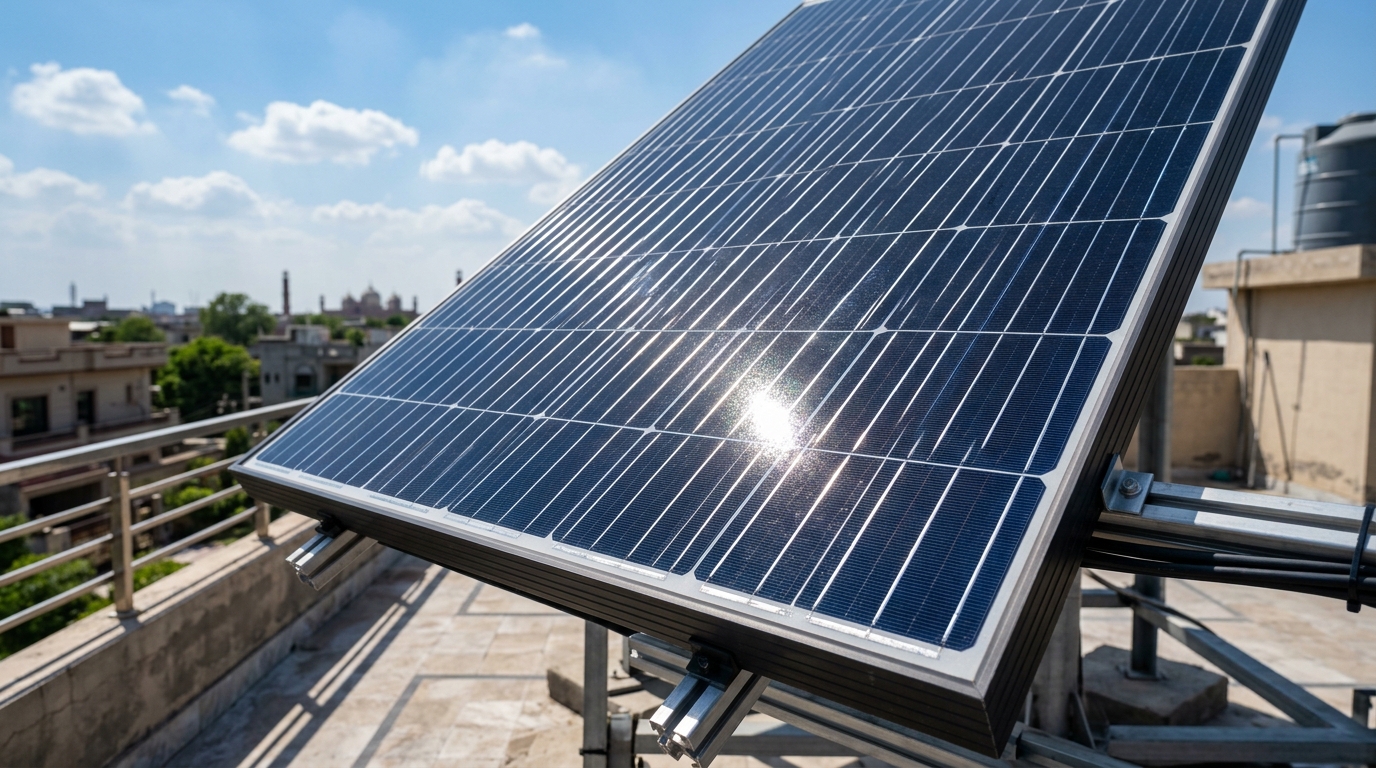
Executive Summary: On congested residential rooftops across Lahore, Karachi, Rawalpindi, and Multan, solar panel arrays must compete for open sky space against dense urban architectural obstacles: elevated concrete water tanks, masonry parapet walls, mumty stairwell towers, satellite dish poles, and neighboring multi-story buildings. Many Pakistani homeowners assume that if a small corner of one solar panel is shaded by an overhead water tank, system power output will drop by only 5% or 10%. In reality, due to the series-connected physics of photovoltaic strings, shading just a single solar cell can collapse the power generation of an entire 10-panel string by 40% to 80%! Worse, persistent localized shading forces shaded cells to act as electrical resistors, generating extreme thermal "hotspots" (exceeding 160°C) that can scorch backsheets, melt EVA encapsulant, and permanently burn through silicon wafers. This 2026 engineering manual provides complete shading thermodynamic analysis, bypass diode operation physics, half-cut split-cell benefits, and rooftop layout strategies.
Table of Contents (Jump to Section)
- 1. The "Garden Hose" Analogy: Why Shading One Cell Chokes an Entire String
- 2. Bypass Diodes: How Panels Protect Themselves from Reverse Breakdown
- 3. Half-Cut (Split-Cell) Technology: The Modern Shading Savior
- 4. Thermal Hotspots & Burn-Through: The Physical Destruction of Solar Cells
- 5. Inverter Global MPPT Tracking: Overcoming False Local Peaks
- 6. Rooftop Architectural Design: Practical Shading Mitigation in Pakistan
- 7. DC Power Optimizers & Micro-Inverters: Module-Level Power Electronics (MLPE)
- 8. Frequently Asked Questions (FAQ)
1. The "Garden Hose" Analogy: Why Shading One Cell Chokes an Entire String
To understand why partial shading causes catastrophic power collapse, we must examine the series-string electrical circuit:
- Series Circuit Physics: In a rooftop solar installation, 8 to 14 solar panels are wired in series to form a high-voltage direct-current string (350V to 600V DC). In a series electrical circuit, current is identical through every single point in the loop. The current capacity of the entire string is strictly limited by the single lowest-performing cell in that string!
- The Garden Hose Constriction: Think of a solar string as a pressurized water hose. If a falling leaf, pigeon dropping, or parapet wall shadow blocks sunlight from just one silicon cell, that shaded cell stops generating current and becomes a bottleneck. Like stepping hard on a garden hose, the single constricted cell blocks the flow of 14 Amperes generated by all the other unshaded panels behind it!
2. Bypass Diodes: How Panels Protect Themselves from Reverse Breakdown
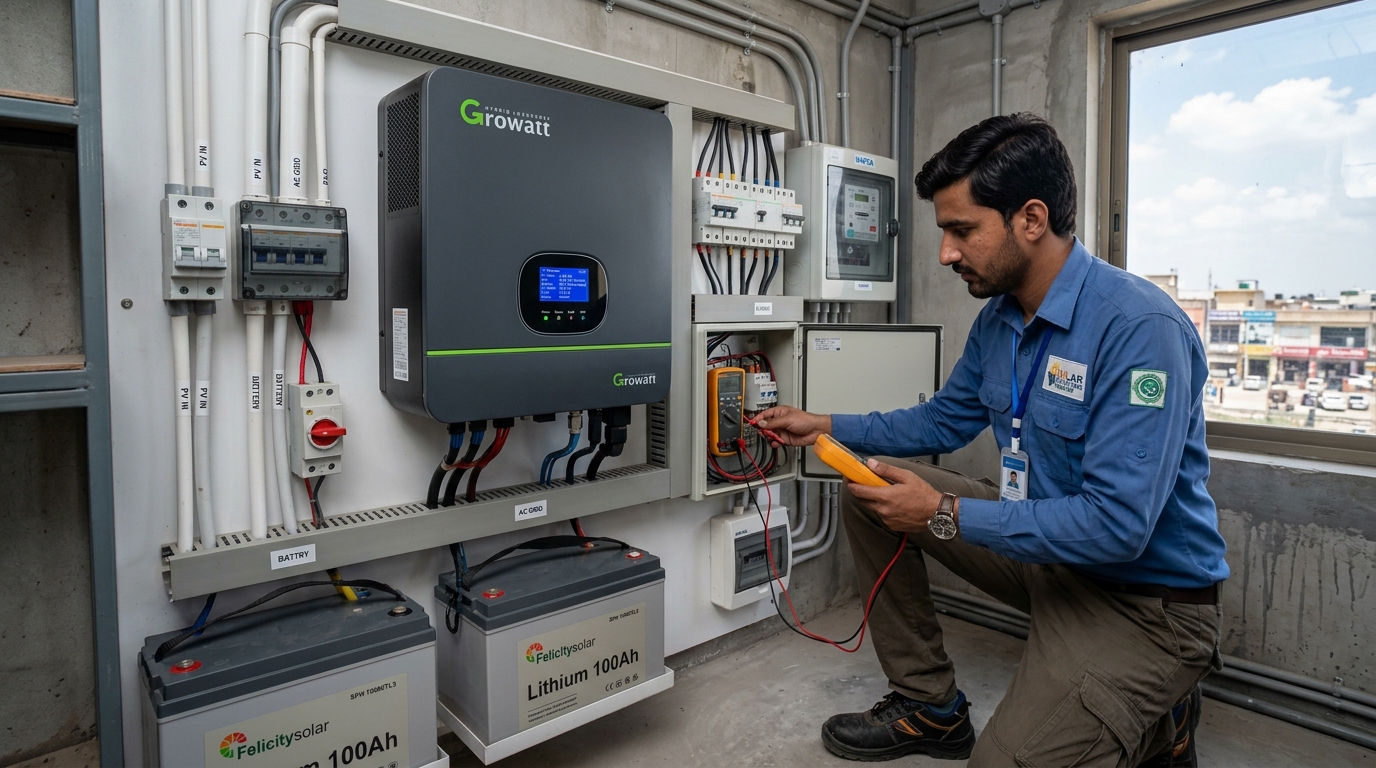
To prevent shaded cells from suffering catastrophic reverse-bias destruction, manufacturers integrate Bypass Diodes inside the rear junction box:
- Operating Principle: A standard full-size solar panel is internally divided into 3 series cell groups, with a Schottky bypass diode wired in antiparallel across each group. Under normal sunny conditions, diodes are reverse-biased (switched OFF) and carry zero current.
- Bypass Activation: When a cell group is shaded, the unshaded cells force current forward, reversing the voltage polarity across the shaded group. The bypass diode turns ON (forward-biased), creating an alternate low-resistance bypass highway around the shaded cell group. Current flows around the obstruction, sacrificing one-third of the panel's voltage (e.g. losing 14 Volts) while allowing the remaining two-thirds of the panel and the rest of the string to continue generating full current!
3. Half-Cut (Split-Cell) Technology: The Modern Shading Savior
All modern Tier-1 solar panels sold in Pakistan (such as Jinko Tiger Neo, Longi Hi-MO X6, JA Solar, and Canadian Solar) utilize Half-Cut Multi-Busbar (MBB) cell architecture:
- Twin Parallel String Construction: In a half-cut panel, standard silicon wafers are precision laser-cut into two equal halves (144 half-cells instead of 72 full cells). The panel is physically and electrically split into two completely independent, parallel upper and lower halves.
- Shading Immunity: If the bottom half of a half-cut panel is shaded by a rooftop parapet wall early in the morning, only the bottom half shuts down—the top half continues producing 100% of its rated power! In legacy full-cell panels, that same bottom shadow activated all three bypass diodes, killing 100% of panel production. Half-cut architecture preserves up to 50% more energy under partial urban shading.
4. Thermal Hotspots & Burn-Through: The Physical Destruction of Solar Cells
When bypass diodes fail, or when partial shading covers a cell without triggering diode forward bias, the consequences are physically destructive:
- The Power Dissipation Sink: Instead of generating power, the shaded cell is forced into reverse bias, acting as an electrical heating resistor. It dissipates the combined electrical energy generated by adjacent cells, converting power into localized heat.
- Temperatures Exceeding 160°C: Internal cell temperatures at the hotspot escalate rapidly, reaching 140°C to 180°C within 30 minutes! This extreme localized heat melts the transparent EVA lamination plastic, chars the white Tedlar backsheet brown/black, cracks the silicon wafer, and can ignite roof combustible materials.
- Thermal Imaging Audits: During routine maintenance, solar engineers scan panel arrays with handheld infrared thermography cameras. Shaded hotspot cells glow intensely as bright yellow-white danger spots against the cool purple background of healthy cells.
5. Inverter Global MPPT Tracking: Overcoming False Local Peaks
Partial shading creates a complex mathematical challenge for solar inverters:
- The Multi-Peak Power Curve: Under uniform sunlight, a solar string displays a single smooth Power-Voltage (P-V) curve with one clear Maximum Power Point (MPP). However, when bypass diodes activate under partial shading, the P-V curve fractures into multiple peaks (local peaks vs the true global peak).
- Global MPPT Scanning Algorithms: Primitive or cheap inverters get trapped on a low "local maximum," operating the string at only 30% capacity. Modern Tier-1 inverters (Huawei, Sungrow, Growatt, Deye) feature Global MPPT Sweep algorithms that scan the entire string voltage spectrum every 10 to 15 minutes, jumping over local traps to lock onto the true global maximum power point, recovering 15% to 25% lost energy.
6. Rooftop Architectural Design: Practical Shading Mitigation in Pakistan
The best defense against shading is rigorous upfront site engineering:
- The Winter Solstice Solar Path Rule: The sun travels lowest across the southern sky on December 21st (winter solstice), casting shadows up to 2.5 times the height of any obstruction. If an overhead concrete water tank stands 8 feet tall, it casts a 20-foot shadow northward in December! Never place panels within the winter shadow cone.
- Elevated Galvanized Iron (GI) Structures (L2 / L3): Rather than mounting panels flat on roof tiles behind parapet walls, elevate the array 6 to 10 feet above roof level on customized galvanized steel frames. This raises panels completely above parapet wall shadows, preserves full rooftop living space, and delivers 100% unshaded solar exposure from sunrise to sunset.
7. DC Power Optimizers & Micro-Inverters: Module-Level Power Electronics (MLPE)
For complex architectural roofs suffering unavoidable, shifting shadows throughout the day:
- Module-Level MPPT Optimizers: Installing individual DC power optimizers (such as Huawei Smart PV Optimizers or SolarEdge) behind each panel decouples the modules. If panel #3 is shaded by a satellite dish, only panel #3 throttles down; the optimizer prevents panel #3 from dragging down the rest of the string!
8. Drone Infrared Thermography Audits for Commercial Rooftops
On large commercial rooftop arrays (such as industrial plazas, textile mills, and shopping malls in Karachi and Lahore), inspecting hundreds of solar panels manually for invisible hotspots is impractical. Solar EPC firms now deploy enterprise inspection drones equipped with radiometric thermal infrared cameras.
Flying autonomous grid patterns at 20 meters altitude under peak 12:00 PM solar irradiance, thermal drones scan thousands of cells in minutes, pinpointing cracked bypass diodes, fractured busbars, and micro-hotspots with 0.1°C thermal sensitivity. Detecting failing cells before thermal runaway prevents catastrophic rooftop fire incidents and streamlines manufacturer warranty claims.
8. Frequently Asked Questions (FAQ)
Does shading a small part of one solar panel reduce the whole system output?
Yes! In a series-connected string, shading a single cell can reduce string output by 40% to 80% because the shaded cell acts as a bottleneck, restricting current flow for all other panels in that string.
What is a solar panel hotspot and is it dangerous?
A hotspot occurs when a shaded cell acts as a resistor, dissipating power as intense localized heat (140°C - 180°C). This can melt EVA plastic, char the backsheet, crack silicon cells, and create severe fire hazards.
How do half-cut solar panels handle shading better than full-cell panels?
Half-cut panels are split into two independent parallel upper and lower halves. If the bottom half is shaded by a wall, the top half continues generating 100% of its rated power, preserving 50% more energy.
How do bypass diodes protect solar panels?
Bypass diodes automatically activate when a cell group is shaded, routing string current around the shaded cells to prevent reverse-bias overheating while allowing the rest of the string to continue generating.
Q5: How can I tell if a bypass diode in my solar panel has failed?
Using a digital clamp meter, measure the open-circuit voltage (Voc) of the suspected panel in direct noon sunlight. If the Voc reading is exactly one-third lower than its nameplate rating (e.g. 33V instead of 50V), one internal bypass diode has short-circuited.
Q6: Can pigeon droppings cause permanent solar panel hotspot damage?
Yes! Concentrated bird droppings create an opaque physical mask over individual cells. If left unwashed for months under intense summer heat, the masked cell generates chronic localized heat, scorching internal EVA lamination.
Need to check or calculate your current utility bill?
Verify your electricity duplicate bill with instant photo-reading verification or calculate slab costs accurately.