Solar Panel Cleaning Frequency in Pakistan 2026: Smog, Dust Losses & Cleaning Methods | BillsOnlinePk
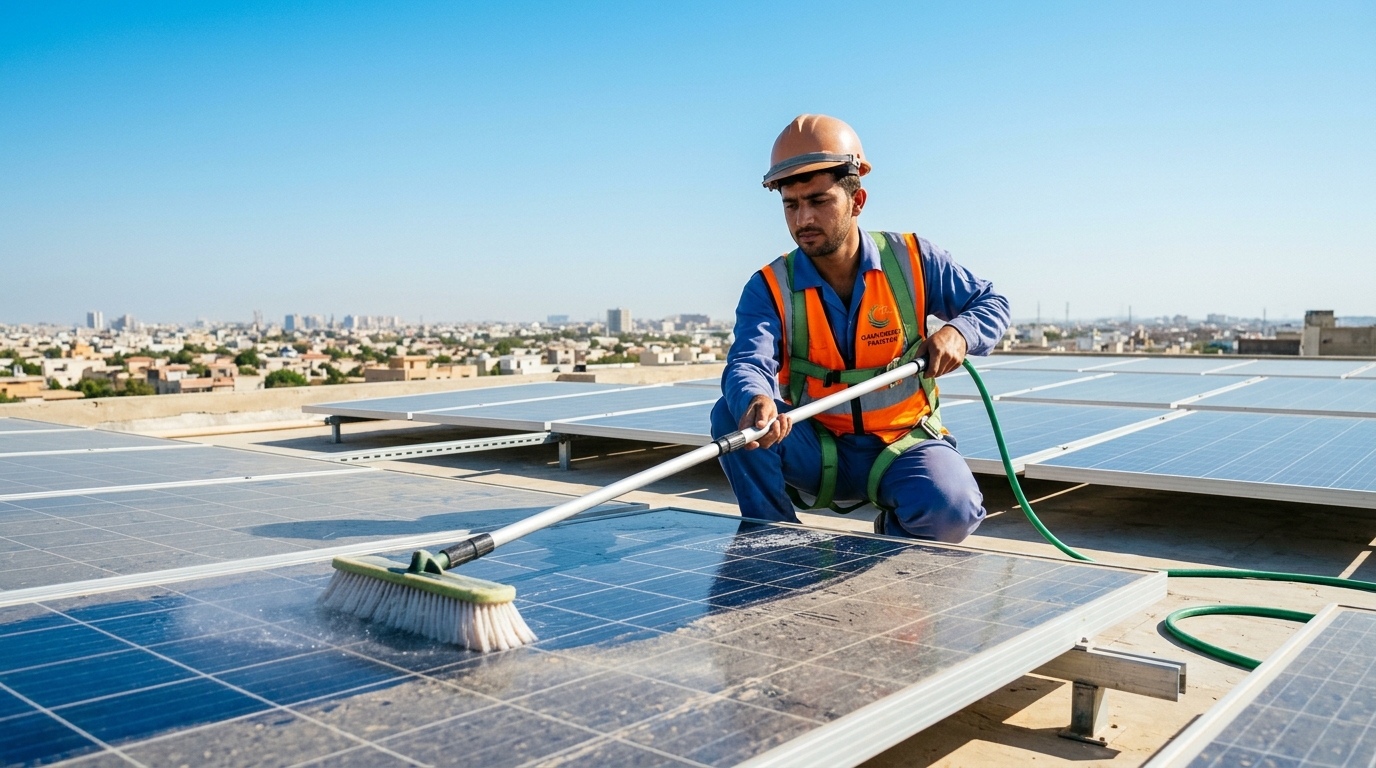
Executive Summary: Pakistan possesses some of the highest solar irradiance levels in the world, with over 300 clear sunny days per year. However, it also suffers from severe atmospheric particulate pollution—including airborne desert dust storms across Southern Punjab and Sindh, cement and vehicular emissions in major metropolitan centers, and the notorious seasonal winter "smog" blanket that covers the Indus basin from October to January. In cities like Lahore, Multan, Faisalabad, and Karachi, dust and particulate soiling can slash solar power generation by 15% to 28% within just 10 days of non-cleaning. On a 10kW residential solar system, this generation loss translates into losing 150 to 250 export units every single month—costing homeowners Rs. 10,000 to Rs. 18,000 in lost net metering bill credits! What is the ideal cleaning frequency? How do you prevent catastrophic thermal shock glass shattering? This 2026 engineering manual provides empirical soiling degradation data, water chemistry specifications, and professional cleaning protocols.
Table of Contents (Jump to Section)
- 1. Physics of Optical Soiling: How Dust & Particulate Matter Block Photons
- 2. Regional Cleaning Frequency Matrix for Pakistan (2026 Guidelines)
- 3. The Deadly Mistake: Thermal Shock & Glass Shattering Hazards
- 4. Water Chemistry: The Peril of Hard Tap Water & Mineral Scale
- 5. Cleaning Tools: Why Wire Brushes & Detergents Void Warranties
- 6. Automated Rooftop Sprinkler Systems: Are They Worth It in Pakistan?
- 7. Financial ROI: How Regular Cleaning Pays for Itself 5x Over
- 8. Frequently Asked Questions (FAQ)
1. Physics of Optical Soiling: How Dust & Particulate Matter Block Photons
To understand the devastating impact of soiling on solar panels, we must evaluate the optical physics of photovoltaic electricity generation:
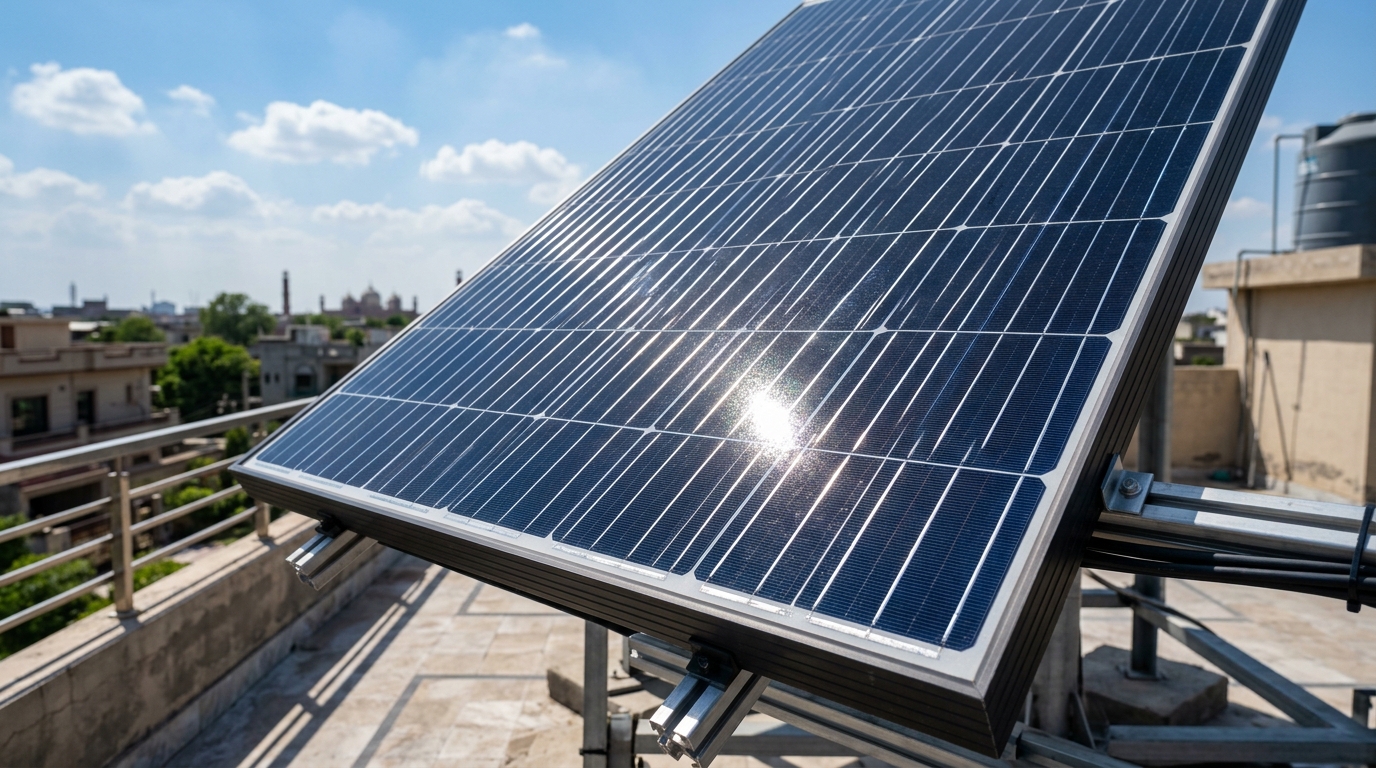
- Photon Scattering & Absorption Losses: Solar photovoltaic cells generate electricity when incoming light photons strike the silicon P-N junction, dislodging free electrons. A layer of microscopic airborne dust (consisting of quartz silica, calcium carbonate, and carbon soot) acts as a physical barrier. Dust particles reflect incoming photons back into the atmosphere and scatter diffuse light at angles that exceed the critical angle of total internal reflection, preventing photons from reaching the silicon wafer.
- The Cementing Effect of Dew & Fog: In Pakistani winters, night-time temperature drops cause relative humidity to surge above 85%, forming morning dew. This moisture mixes with airborne dust particles on the panel glass, forming a sticky mud slurry. When the morning sun rises and evaporates the moisture, the mineral salts bake into a hard, stubborn crust (cementation) that cannot be blown away by wind and resists simple dry dusting.
2. Regional Cleaning Frequency Matrix for Pakistan (2026 Guidelines)
Solar panel cleaning frequency cannot follow a generic schedule; it must be calibrated to your specific geographical location and seasonal weather patterns:
| Geographical Zone / Region | Primary Environmental Pollutant | Recommended Summer Cleaning Frequency | Recommended Winter / Smog Cleaning Frequency |
|---|---|---|---|
| Central Punjab (Lahore, Faisalabad, Gujranwala) | Heavy industrial smog, particulate soot, brick kiln smoke | Every 10 to 14 Days | Every 5 to 7 Days (During Smog Season) |
| Southern Punjab & Upper Sindh (Multan, Bahawalpur, Sukkur) | Abrasive desert dust, sandstorms, agricultural harvest chaff | Every 7 Days (Weekly) | Every 10 to 12 Days |
| Karachi & Coastal Belt | Marine salt spray, high humidity, vehicular diesel exhaust | Every 10 to 14 Days | Every 14 Days (Wash salt crusts) |
| Islamabad & Northern Punjab | Pine pollen, construction dust, seasonal rain wash | Every 15 to 20 Days | Every 15 to 20 Days |
3. The Deadly Mistake: Thermal Shock & Glass Shattering Hazards
The #1 physical mistake made by Pakistani homeowners and domestic sweepers is washing solar panels at the wrong time of day:
- Thermodynamic Shock Destruction: On a hot summer afternoon in Multan or Lahore with 43°C ambient temperature, solar panel dark silicon cells and tempered glass operate at internal temperatures between 65°C and 75°C. If someone sprays cold groundwater (at 22°C) onto that scorching hot glass, the rapid localized thermal contraction creates immense tensile stress. The 3.2mm tempered glass instantly shatters with a loud pop into thousands of spiderweb fractures!
- The Golden Rule of Solar Washing: Only clean solar panels early in the morning before 8:00 AM, or late in the evening after 6:00 PM, when panels have cooled down to ambient temperature. Never wash panels in direct, intense midday sunlight.
4. Water Chemistry: The Peril of Hard Tap Water & Mineral Scale
In most Pakistani urban cities, municipal water and tube well groundwater are severely "hard," containing high concentrations of dissolved calcium bicarbonate, magnesium sulfate, and silica (TDS > 400 to 1,200 ppm):
- Permanent Limescale Etching: When hard water is sprayed onto solar panels and left to dry under the sun, water evaporates, leaving behind stubborn white circular mineral deposits (calcium scale). Over time, these mineral rings chemically bond with the panel's anti-reflective titanium dioxide coating, permanently etching the glass and reducing photon transmission by 8% to 12% permanently!
- Ideal Water Specification: Use demineralized, Reverse Osmosis (RO), or rainwater for panel cleaning. If using municipal tap water, you MUST vigorously wipe away all standing water droplets using a professional rubber squeegee before the sun can evaporate them into mineral spots.

5. Cleaning Tools: Why Wire Brushes & Detergents Void Warranties
Using improper cleaning tools permanently damages solar panel performance and voids manufacturer warranties:
- Never Use Abrasive Scouring Pads or Coarse Brooms: Hard plastic bristles and scouring sponges scratch the anti-reflective microscopic coating on tempered solar glass. These micro-scratches trap dust permanently and cause light scattering. Use only soft microfiber wash mops and telescopic aluminum poles.
- Avoid Harsh Household Detergents & Bleach: Never use Surf, laundry detergent, dishwashing liquid, or acidic toilet cleaners on solar panels. Alkaline laundry powders leave an invisible soapy film that attracts dust like a magnet within 24 hours. Furthermore, harsh chemicals corrode the anodized aluminum frame seals and degrade EVA backsheets. Use pure water or specialized pH-neutral solar cleaning solutions.
6. Automated Rooftop Sprinkler Systems: Are They Worth It in Pakistan?
Many commercial buildings and multi-story houses in Pakistan are installing automated sprinkler washing nozzles:
- How Automated Sprinklers Work: A dedicated 1HP water pump, connected to an electronic digital timer, energizes a network of 360-degree brass misting nozzles mounted along the top edge of each panel row for 90 seconds every morning at 5:30 AM before sunrise.
- Filtration Requirement: Automated sprinkler systems are only viable if paired with an in-line sediment and water softening filter. If operated with unfiltered hard water, sprinkler nozzles clog within months and leave heavy calcified water tracks across the panels.
7. Financial ROI: How Regular Cleaning Pays for Itself 5x Over
The financial return on regular solar cleaning is extraordinary under 2026 Pakistani electricity tariffs:
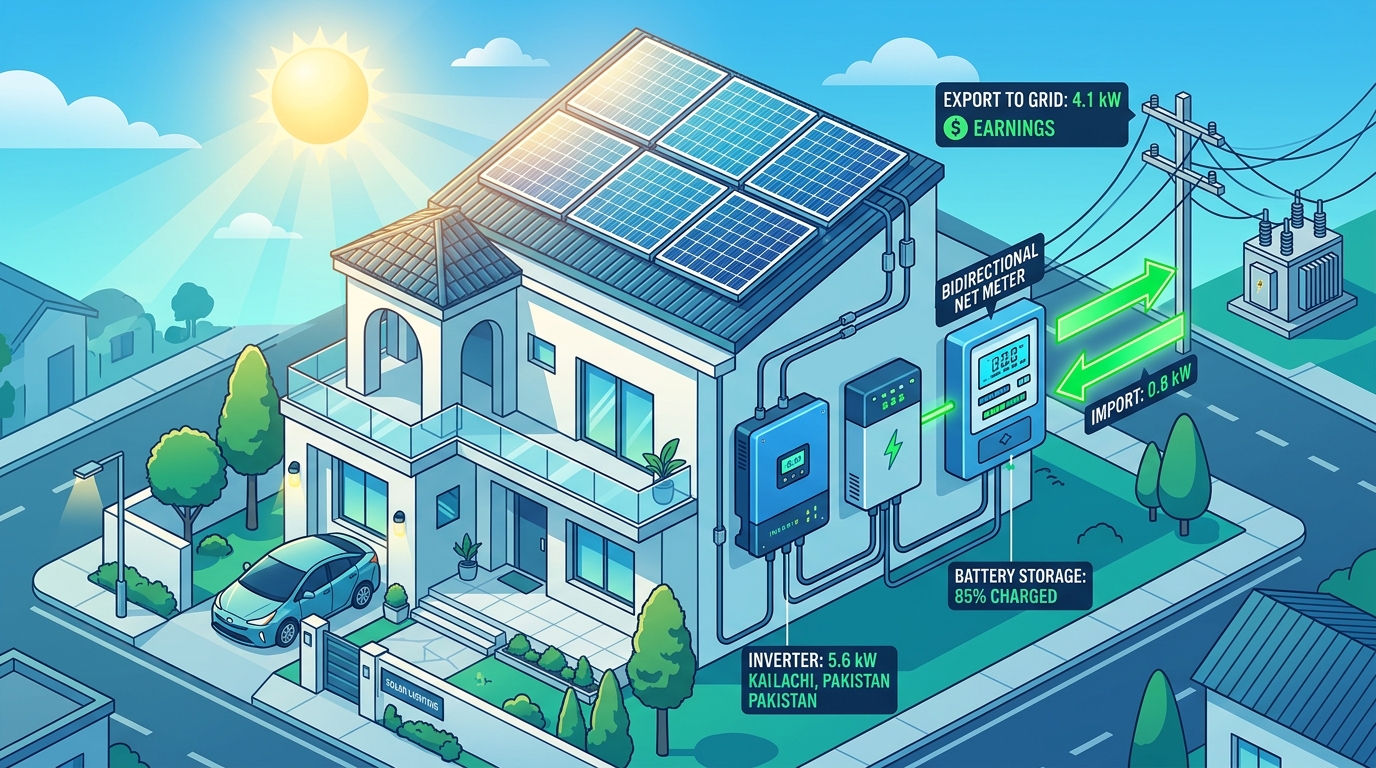
- 10kW System Financial Model: A 10kW solar system generates approximately 1,350 kWh units per month in clean condition. In dusty conditions (20% soiling loss), generation collapses to 1,080 units—a loss of 270 electricity units per month.
- Financial Loss: At an average net metering export/offset value of Rs. 55 per unit, this represents a financial loss of Rs. 14,850 every single month. Hiring a professional solar cleaning service twice a month for Rs. 2,500 delivers a net monthly profit increase of over Rs. 12,000!
8. Commercial Megawatt Solar Farm Automated Robotic Cleaners
For commercial and utility-scale solar farms across the Cholistan desert in Bahawalpur (such as the Quaid-e-Azam Solar Park) or industrial textile rooftop arrays in Faisalabad, manual cleaning with handheld squeegees is physically impossible across 20,000+ panels. High ambient evaporation rates and groundwater scarcity require waterless cleaning robotics.
Modern commercial installations deploy autonomous crawler robots equipped with specialized microfiber rotating spiral rollers and electrostatic air blades. Traveling along panel rows at 15 meters per minute during the night, robotic cleaners sweep away loose quartz sand and soot without consuming a single drop of water, preserving 99.2% optical efficiency year-round.
8. Frequently Asked Questions (FAQ)
How often should solar panels be cleaned in Pakistan?
In urban centers like Lahore, Multan, and Karachi, clean your solar panels every 10 to 14 days. During the intense winter smog season in Punjab (November to January), clean them every 5 to 7 days to maintain full generation.
Can I wash solar panels in the afternoon with tap water?
NEVER wash panels in the afternoon! Cold water sprayed on hot solar glass (65°C+) causes catastrophic thermal shock, shattering the tempered glass instantly. Wash panels early in the morning before 8:00 AM.
Does rain clean solar panels effectively in Pakistan?
Light rain actually makes panels dirtier by turning loose dust into sticky mud. Only heavy, continuous monsoon downpours provide effective natural washing. You must still clean stubborn cemented dust manually after light showers.
What is the best soap or detergent for cleaning solar panels?
Use clean demineralized or RO water alone. Avoid laundry powders (Surf), bleach, or dishwashing soaps, as they leave a sticky chemical residue that rapidly attracts more dust and corrodes aluminum frame seals.
Q5: Can I clean solar panels using a high-pressure commercial pressure washer?
No! High-pressure water jets exceeding 30 Bar can force water past silicone frame seals, penetrate the rear junction box, and cause internal moisture delamination that destroys bypass diodes. Use gentle, low-pressure domestic water flow with soft microfiber wash heads.
Q6: Does cleaning solar panels in the early morning cause dew condensation spots?
Early morning cleaning before sunrise allows surface water to evaporate smoothly as ambient temperature rises, leaving zero mineral scale rings when paired with squeegee drying.
Need to check or calculate your current utility bill?
Verify your electricity duplicate bill with instant photo-reading verification or calculate slab costs accurately.