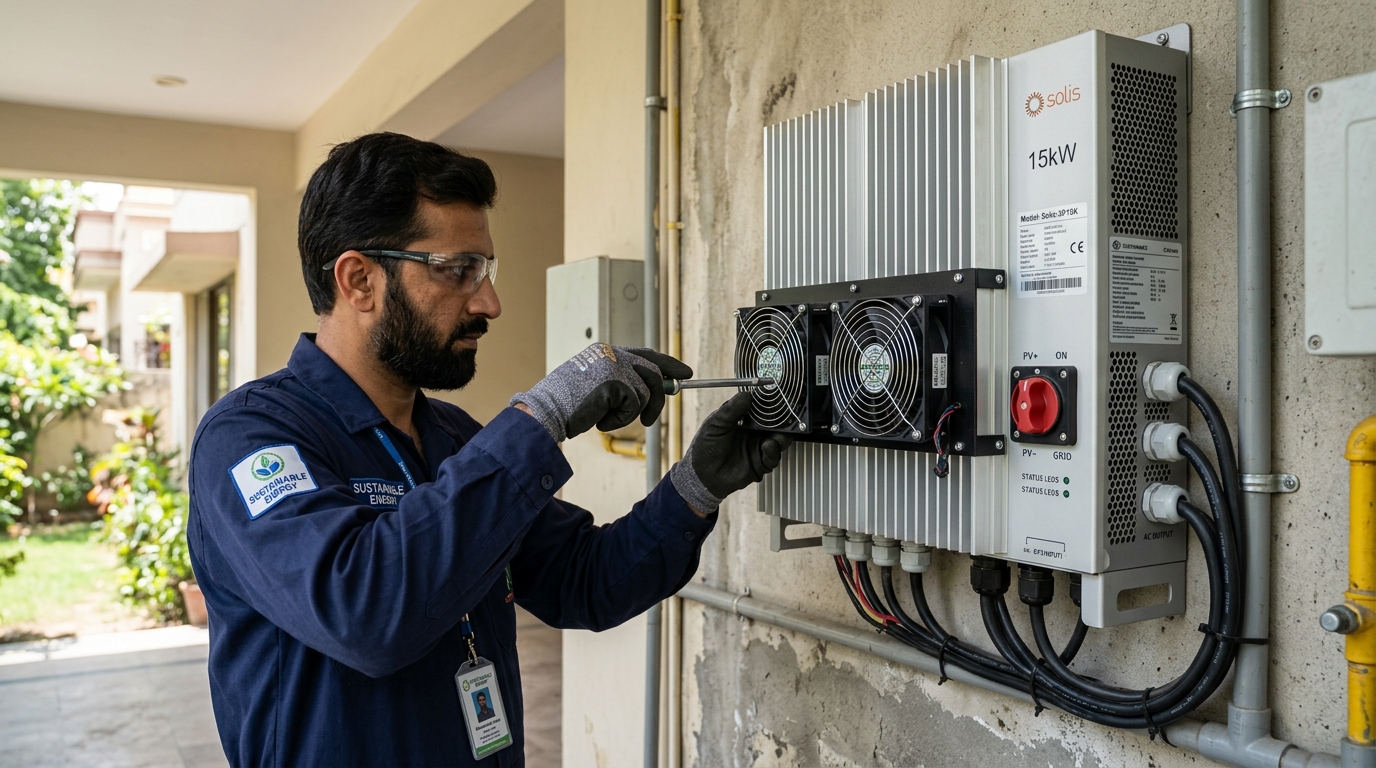
1. The Summer Heat Crisis: Why Pakistani Inverters Throttle in May to July
Between May and August, solar photovoltaic systems across Pakistan experience peak solar irradiance. In cities like Multan, Sukkur, Bahawalpur, Faisalabad, and Sibi, solar flux regularly exceeds 1,000 Watts per square meter. Homeowners eagerly anticipate record-breaking daily electricity generation to power heavy air conditioning loads. Yet, hundreds of thousands of system owners open their inverter monitoring apps (such as Solarman, FusionSolar, iSolarCloud, or ShinePhone) at 1:00 PM on a scorching 46°C June afternoon, only to discover a baffling anomaly: a 10 kW solar system operating with pristine blue skies is suddenly capped at only 6.5 kW or 7.0 kW of output!
This baffling power collapse is rarely caused by broken solar panels or cloudy weather. Instead, it is the direct manifestation of a vital electronic protective mechanism engineered into modern grid-tied and hybrid inverters: Thermal Power Derating. When the ambient temperature climbs into the mid-forties and stagnant desert air surrounds the inverter housing, the internal junction temperatures of power semiconductor switches (Insulated-Gate Bipolar Transistors or IGBTs), main high-frequency transformers, and electrolytic smoothing capacitors approach dangerous operational limits (typically 85°C to 105°C). To prevent the internal silicon switches from experiencing catastrophic thermal breakdown and catching fire, the inverter’s firmware automatically dials back its power output, shedding 20 to 35 percent of your generation potential.
In Pakistan, where electricity tariffs hover at historic highs, losing one-third of your peak midday generation directly inflates your monthly grid bill. In this comprehensive technical guide, BillsOnlinePk demystifies the thermodynamics of solar inverter cooling, evaluates active versus passive thermal architectures, and presents battle-tested cooling solutions tailored specifically for Pakistan's punishing summer climate.
Critical Thermal Fact: For every 10 degrees Celsius rise in operating temperature above manufacturer baseline specifications (40°C), the operational lifespan of electrolytic smoothing capacitors inside a solar inverter is reduced by precisely 50 percent (Arrhenius' Rule). Overheating is the number one cause of premature inverter board failure in Pakistan.
2. Physics of Inverter Power Losses: IGBT Switching Heat & Derating Curves
A solar inverter is fundamentally a high-power DC-to-AC converter. During the conversion process, modern inverters achieve impressive peak efficiencies ranging from 97.5 percent to 98.6 percent. However, the remaining 1.5 to 2.5 percent of electrical energy is converted directly into waste thermal energy within the enclosed casing:
P_waste = P_in × (1 - η_inverter)
When a 15 kW on-grid inverter operates at full capacity under intense midday sunshine, a 2.0 percent conversion loss generates 300 Watts of continuous internal heat. This heat is concentrated in components no larger than a matchbox: the silicon IGBT dice and fast-recovery diodes operating at switching frequencies between 16 kHz and 32 kHz.
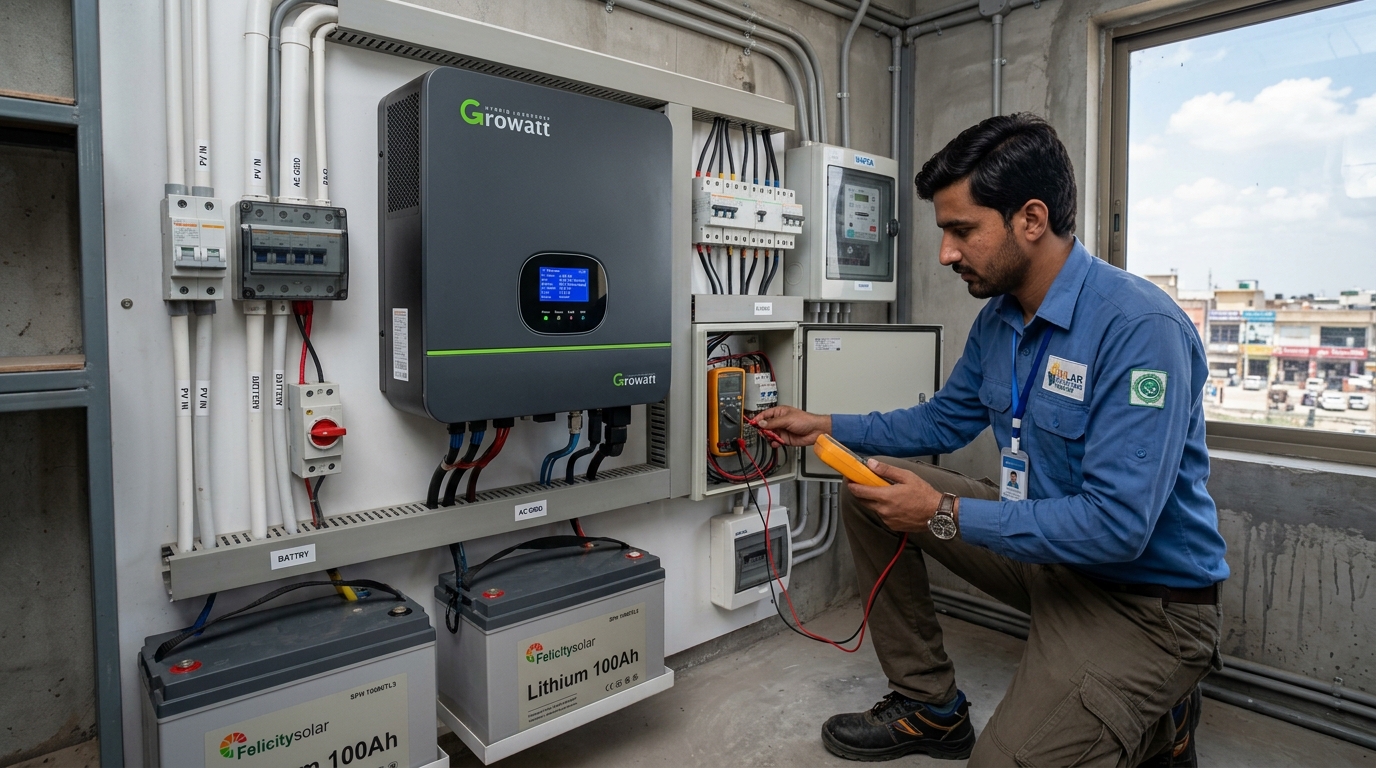
To prevent localized silicon melting, inverter manufacturers establish an operational Thermal Derating Curve. The table below illustrates the standard thermal throttling profile programmed into leading tier-1 European and Asian inverters deployed in Pakistan:
| Ambient Air Temperature | Internal Heat Sink Temp | 10 kW Inverter Power Output | Available Output Capacity | Operational Status & Efficiency |
|---|---|---|---|---|
| 25°C (Cool Spring Morning) | 45°C - 52°C | 10.0 kW (Full Rated Capacity) | 100.0% | Optimal MPPT tracking; zero clipping or throttling. |
| 35°C (Normal Warm Day) | 60°C - 68°C | 10.0 kW (Full Rated Capacity) | 100.0% | Standard internal fan speed (50% PWM); 100% capacity maintained. |
| 42°C (Hot Summer Afternoon) | 75°C - 82°C | 9.2 kW (Throttling Begins) | 92.0% | Internal fans at 100% max RPM; minor derating initiated. |
| 47°C (Severe Heatwave / Direct Sun) | 88°C - 94°C | 7.1 kW (Severe Derate) | 71.0% | Aggressive power limit; 2,900 Watts of clean solar dumped! |
| 52°C (Stagnant / Poor Ventilation) | > 98°C | 0.0 kW (Thermal Trip) | 0.0% (Shutdown) | Emergency Over-Temperature Shutoff (Error 02); inverter restarts after cooling. |
3. Forced-Air Fan Cooling vs Natural Convection Heat Sinks in Major Brands
In Pakistan's solar market, inverter manufacturers adopt two diametrically opposed thermodynamic cooling methodologies:
- Natural Convection (Fan-less Passive Cooling): Popularized by brands like Huawei (SUN2000 residential series) and Sungrow residential models. These units omit external cooling fans entirely, relying on massive, precision-cast aluminium finned heat sinks on the rear casing.
- Advantages: Ultra-quiet operation (inaudible in residential spaces), IP65/IP66 sealed enclosure with zero moving mechanical parts that can jam with airborne dust, virtually zero maintenance.
- Severe Disadvantage in Pakistan: Natural convection requires cooler ambient air to rise naturally across the fins. When ambient temperatures surpass 42°C in stagnant residential alleys or covered verandas, passive heat sinks reach thermal saturation, triggering severe early derating.
- Forced-Air Active Cooling (Internal/External PWM Fans): Employed by brands like Solis, Growatt, Knox, Inverex, Fronius, and high-capacity commercial Sungrow/Huawei units. These inverters feature IP68-rated brushless DC (BLDC) cooling fans that force high-velocity air across internal heat exchangers or external finned tunnels.
- Advantages: Substantially delayed thermal derating; maintains 100% output up to 48°C or 50°C when supplied with adequate airflow.
- Disadvantages in Pakistan: High acoustic noise (whining fan hum), fan filters rapidly clog with fine silt, agricultural dust, and urban smog, requiring biannual cleaning. Fan failure instantly blinds the inverter to high-load operation.
4. Diagnosing Error Codes: Fan Lock, Over-Temperature & Inverter Derate Alarms
When an inverter’s internal microcontroller detects abnormal thermal parameters, it records diagnostic error codes on its LCD panel and broadcasts alerts to the user’s mobile application:
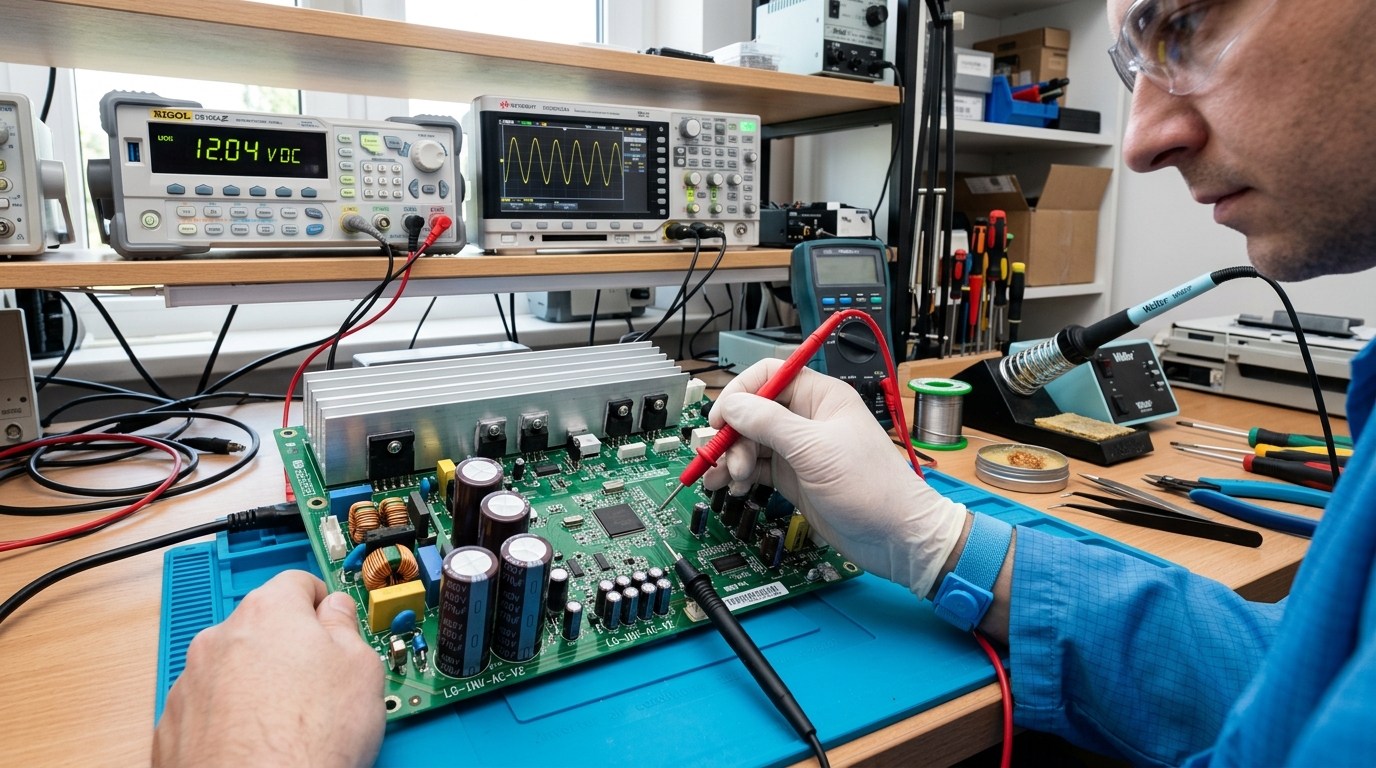
| Inverter Brand | Error Code / Alarm | Exact Fault Description | Root Cause & Immediate Remedy |
|---|---|---|---|
| Inverex / Voltronic Hybrid | Fault 02 (F02) | Inverter Heat Sink Over-Temperature | Ambient air exceeds 50°C, or internal cooling fan has seized. Replace 12V/24V fan. |
| Growatt (SPF / MOD series) | Error 02 / Warning 203 | Internal Temperature Out of Range | Air intake vents choked with dust. Blow compressed dry air through side vents. |
| Solis (S5 / S6 series) | TEMP-FAIL / AL-02 | Ambient or Heat Sink Temp Sensor Open | Internal NTC thermistor failure or severe localized heat trap behind mounting plate. |
| Huawei SUN2000 | Alarm ID 2068 | High Ambient Temperature / External Fan Fault | Forced derating active. Install external sun-shade canopy to deflect direct solar radiation. |
| Knox / Crown Hybrid | Error 15 / Fan Lock | Cooling Fan Speed Abnormal (< 500 RPM) | Fan bearings jammed with lint or geckos/lizards lodged in fan blades. Replace fan assembly. |
5. Inverter Mounting Location Engineering: North Wall Shading, Canopies & Clearances
More than 60 percent of inverter overheating issues in Pakistan stem from atrocious physical mounting locations chosen during installation. Inverter mounting site selection must obey strict thermal engineering rules:
- Never Mount on South-Facing or West-Facing Walls: In Pakistan, south-facing walls absorb direct solar radiation throughout midday, while west-facing walls heat up intensely from 2:00 PM to 6:00 PM. A brick wall exposed to western sun can reach surface temperatures exceeding 58°C, radiating intense heat into the rear heat sink! Always mount inverters on North-facing or East-facing walls that remain permanently shaded during peak afternoon heat.
- Install a Dedicated Heat-Deflector Canopy: If an inverter must be mounted on a roof or open terrace, fabricate a wide sheet-metal or fiber-cement shade canopy positioned at least 50 centimeters (1.6 feet) above the top of the inverter. Painting the canopy white reflects 80% of direct infrared rays.
- Enforce Minimum Physical Clearances: Never sandwich an inverter between walls or inside a locked, unventilated wooden cabinet! Maintain at least 30 cm (1 foot) of open clearance on both sides, 50 cm above, and 50 cm below the unit to allow unimpeded natural chimney-effect air circulation.
6. Auxiliary Smart Cooling Fan Kits: Commercial vs DIY Dual-Fan Installations
For naturally cooled inverters (such as Huawei and Sungrow) or forced-air inverters struggling in extreme regions like Multan and Sibi, retrofitting an Auxiliary Smart Cooling Fan Kit is the single most cost-effective performance upgrade a homeowner can make.
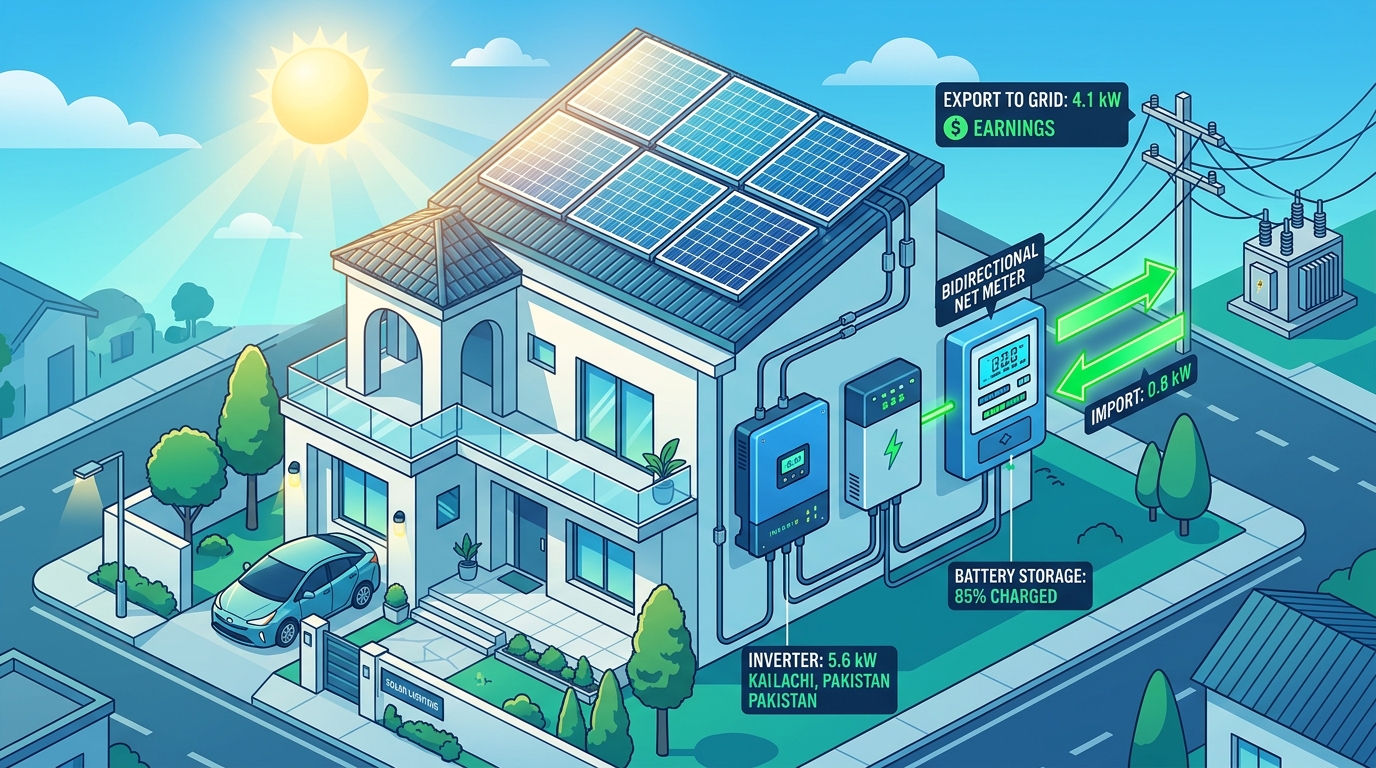
An auxiliary cooling kit consists of two high-efficiency, IP67-rated 120mm or 140mm brushless DC fans (ball-bearing type, 12V, 0.3A) mounted directly onto the bottom of the inverter’s rear heat sink fins, blowing cool upward air through the fin channels. The fans are automated via a digital temperature controller (such as the ubiquitous W1209 micro-thermostat, costing under PKR 800 in Pakistan):
- Thermostat Probe Placement: The waterproof NTC temperature sensor is taped directly into the upper middle section of the inverter heat sink fins using thermally conductive tape.
- Trigger Set-Points: Program the controller to automatically turn the fans ON when heat sink temperature hits 45°C, and turn them OFF when the temperature drops to 38°C.
- Power Supply: The kit runs off a tiny 12V 1.5A DC wall-plug adapter plugged into the inverter’s AC output backup circuit, consuming less than 8 Watts of electricity.
Empirical Field Result: Installing an auxiliary dual-fan kit drops inverter heat sink temperatures by an astonishing 12°C to 18°C within 15 minutes of activation, completely eliminating thermal derating and recovering up to 3.0 kW of lost solar generation during peak summer afternoons!
7. Step-by-Step Maintenance: Cleaning Heat Sink Fins, Air Filters & Thermal Paste
To keep your inverter operating at peak thermodynamic efficiency, execute this seasonal maintenance protocol every April before the onset of summer:
- Safe Electrical Shutdown: Switch OFF the AC circuit breaker in the main distribution board. Next, rotate the inverter’s physical DC isolator switch to the "OFF" position. Wait a full 5 to 10 minutes to allow internal high-voltage smoothing capacitors to discharge completely.
- External Dry Cleaning: Use a high-velocity electric air blower (holding the nozzle at least 8 inches away) to blast accumulated dust, cobwebs, and airborne lint from between the rear aluminium heat sink fins and side air intake grilles.
- Fan Inspection & Cleaning: On fan-cooled inverters, inspect the underside fan blades. If dirt has caked onto the leading edge of the blades, gently scrub them with a soft nylon toothbrush dipped in isopropyl alcohol. Ensure the fans spin freely with zero bearing friction.
- Thermal Interface Inspection (For Older Units): On inverters operating past their 5th year, internal thermal grease between the power semiconductor modules and the exterior heat sink can dry out and crack. A qualified electronics technician can dismantle the casing, clean off oxidized paste, and apply high-conductivity Arctic MX-4 or silver-based thermal paste, restoring rapid thermal transfer.
8. Financial Impact: How Thermal Management Saves 1,200+ Units Every Summer
To quantify the financial payoff of active inverter thermal management, let us examine an empirical 15 kW grid-tied solar system in Faisalabad, Punjab. Over the 120-day summer window (May 1 to August 31), an unshaded, overheating inverter derates by an average of 2.8 kW for 3.5 peak hours every sunny day:
- Daily Energy Lost to Derating: 2.8 kW × 3.5 Hours = 9.8 kWh (Units) lost per day!
- Total Summer Generation Loss (120 Days): 9.8 Units × 120 Days = 1,176 Units (kWh) unharvested!
- Financial Value of Lost Units: Under 2026 non-protected residential billing tariffs averaging 60 PKR per unit, 1,176 lost units equal PKR 70,560 in uncollected solar savings!
By contrast, building a customized sheet-metal shade canopy and installing a smart dual-fan auxiliary cooling kit costs approximately PKR 6,500 total. The thermal management upgrade pays for itself in less than 11 days of summer operation, while extending the operating life of your multi-hundred-thousand-rupee solar inverter by up to a decade.