Solar DC Cable Sizing Guide in Pakistan 2026: 4mm vs 6mm vs 10mm Wire Losses & Voltage Drop | BillsOnlinePk
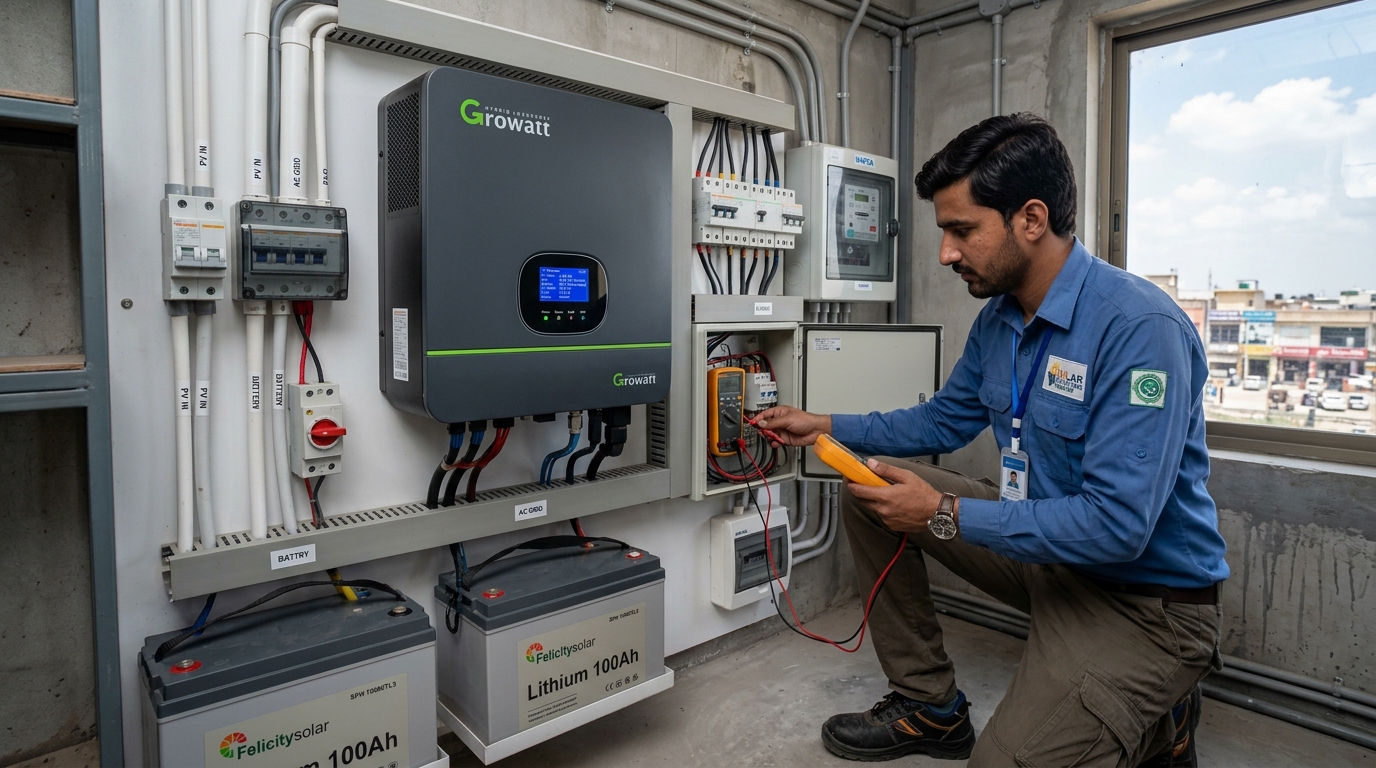
Executive Summary: When installing rooftop solar systems in Pakistan, consumers and installers obsess over solar panel wattage (585W vs 600W) and inverter brands (Huawei vs Sungrow vs Deye). Yet, in over 70% of residential and commercial installations across Lahore, Karachi, Islamabad, and Multan, the entire balance of system is compromised by undersized, substandard direct-current (DC) cables. Using thin 4mm² cables for long 30-meter cable runs or substituting cheap automotive AC cables for specialized solar DC wire creates severe electrical resistance. This causes massive voltage drops exceeding 5% to 8%, overheats cables inside PVC conduit pipes, and robs homeowners of hundreds of generated electricity units every year. Worse, poor DC cable termination represents the single leading cause of rooftop solar electrical fires in Pakistan. This definitive 2026 engineering manual provides exact Ohm's Law voltage drop formulas, 4mm² vs 6mm² vs 10mm² wire loss tables, XLPO insulation requirements, and professional MC4 connector crimping protocols.
Table of Contents (Jump to Section)
- 1. Ohm's Law & Resistance: The Physics of DC Cable Losses (I²R Heating)
- 2. Wire Sizing Comparison: 4mm² vs 6mm² vs 10mm² DC Cable Matrix
- 3. Why Ordinary AC Building Wire (PVC) Must NEVER Be Used for Solar DC
- 4. Tinned Copper vs Bare Copper: Atmospheric Oxidation Resistance
- 5. MC4 Connector Crimping: The #1 Root Cause of Rooftop Solar Fires
- 6. Conduit Protection & Cable Tray Engineering on Concrete Roofs
- 7. Step-by-Step Voltage Drop Calculation Formula
- 8. Frequently Asked Questions (FAQ)
1. Ohm's Law & Resistance: The Physics of DC Cable Losses (I²R Heating)
To understand why cable thickness matters, we must examine the fundamental electrical physics governing direct-current conductors:
- Conductor Resistance (R = ρ × L / A): The electrical resistance (R) of a copper wire is directly proportional to its resistivity (ρ) and physical length (L), and inversely proportional to its cross-sectional area (A). A longer cable has higher electrical resistance; a thicker cable has lower resistance.
- The I²R Power Loss Formula: Power lost as pure heat inside a cable is calculated as P_loss = I² × R, where (I) is the string current in Amperes. Notice that power loss scales with the square of current! Modern high-wattage solar panels (580W to 700W) operate with operating currents (Imp) of 13 to 17 Amperes. Passing 15 Amps through a high-resistance cable generates substantial heat, dropping string voltage before it reaches the inverter MPPT tracker.
- The 2% Voltage Drop Rule: International standard IEC 60364-7-712 mandates that total voltage drop between the solar panel array and inverter terminals must remain strictly under 2.0% (and preferably under 1.0%). Any voltage drop above 2% represents pure financial waste.
2. Wire Sizing Comparison: 4mm² vs 6mm² vs 10mm² DC Cable Matrix
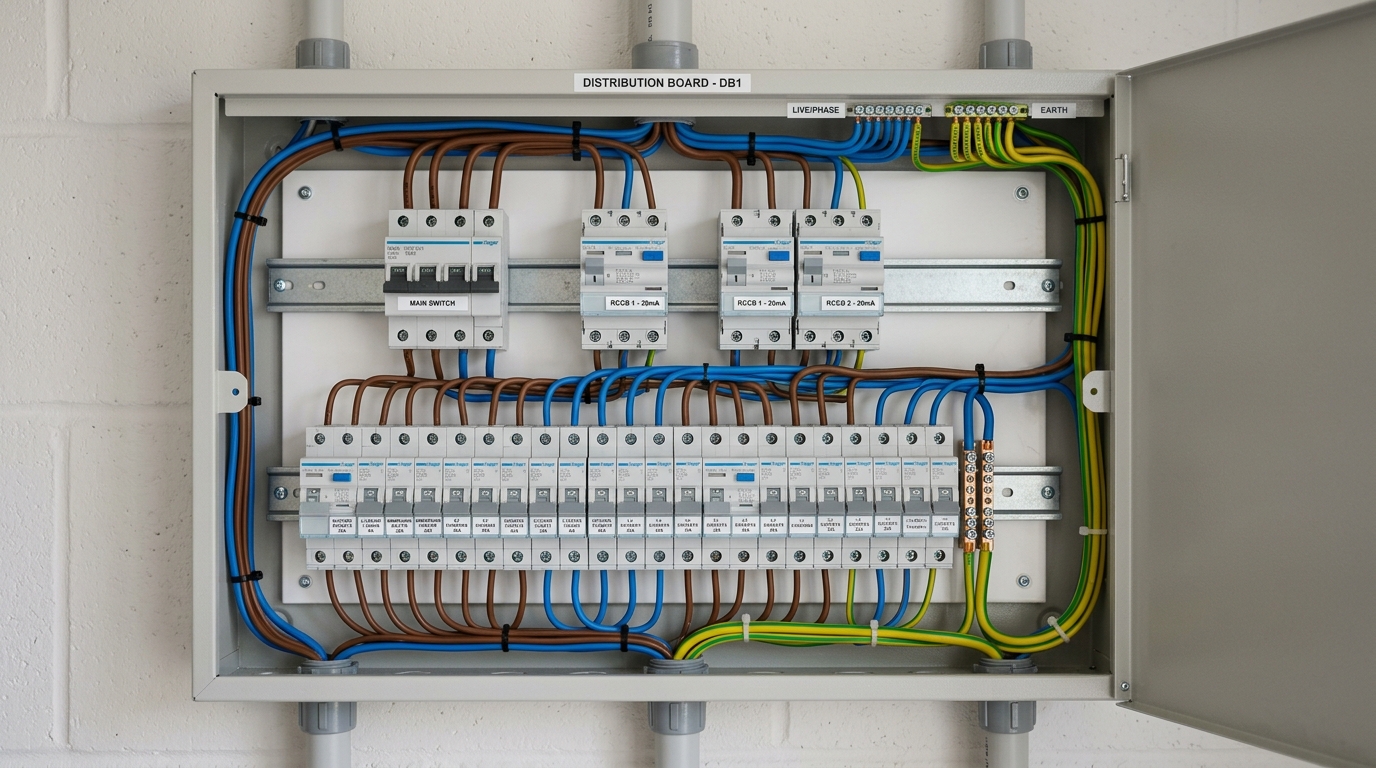
Here is an empirical comparison of standard cross-sectional cable sizes under typical residential rooftop installation parameters in Pakistan (Single String of 10 Panels, Voc = 500V, Vmp = 420V, Imp = 14 Amps):
| Cable Cross-Section Area | Resistance per Km (at 20°C) | Voltage Drop across 20-Meter Run | Voltage Drop across 40-Meter Run | Permissible Current Capacity (60°C Ambient) |
|---|---|---|---|---|
| 4.0 mm² Solar DC Cable | 4.95 Ω / km | 2.77 Volts (0.66% Drop) | 5.54 Volts (1.32% Drop) | Up to 25 Amperes (Short runs only) |
| 6.0 mm² Solar DC Cable | 3.30 Ω / km | 1.85 Volts (0.44% Drop) | 3.70 Volts (0.88% Drop) | Up to 35 Amperes (Standard Industry Choice) |
| 10.0 mm² Solar DC Cable | 1.91 Ω / km | 1.07 Volts (0.25% Drop) | 2.14 Volts (0.51% Drop) | Up to 50 Amperes (Long runs & parallel strings) |
| Cheap AC Cable (Substandard 7/29) | Variable >6.5 Ω / km | >7.28 Volts (>1.73% Drop) | >14.5 Volts (Dangerous 3.46% Drop) | ILLEGAL & EXTREME FIRE HAZARD! |
3. Why Ordinary AC Building Wire (PVC) Must NEVER Be Used for Solar DC
A widespread and criminal practice among unqualified electricians in Pakistan is using ordinary household AC single-core wire (such as PVC-insulated 7/29 or 7/36 building wire) for outdoor solar panel string wiring:
- Ultraviolet (UV) Radiation Degradation: Standard PVC insulation has zero UV resistance. Under blistering Pakistani summer sunshine, PVC becomes brittle, cracks, and flakes away within 12 to 18 months, exposing bare copper conductors at 600V to 800V DC on concrete roofs!
- Thermal Rating Breakdown: Standard AC wire is rated for a maximum operating temperature of 70°C. On a concrete rooftop in Multan or Lahore during summer, ambient air inside a closed black PVC pipe reaches 65°C to 80°C. Standard insulation softens, melts, and shorts out against adjacent conduits.
- Cross-Linked Polyolefin (XLPO) Certification: Certified solar cables (compliant with EN 50618 / TÜV 2 Pfg 1169) utilize dual-layer Cross-Linked Polyolefin (XLPO) insulation rated for -40°C to +120°C with 25-year direct UV and ozone resistance, flame retardancy, and halogen-free construction.
4. Tinned Copper vs Bare Copper: Atmospheric Oxidation Resistance
Quality solar DC cables are manufactured exclusively with Tinned Annealed Copper Strands:
- Atmospheric Oxidation: Pure bare copper oxidizes when exposed to outdoor humidity, sulfur, and oxygen, forming a dark green/black patina of copper oxide. Copper oxide is a semiconductor with high electrical resistance. In humid coastal cities like Karachi, bare copper wire ends corrode inside MC4 connectors within 6 months, causing high-resistance hot spots.
- Tinned Protective Coating: Each individual multi-strand wire in a certified solar cable is electroplated with a microscopic layer of pure Tin. Tin resists oxidation, prevents galvanic corrosion at connector crimps, and ensures electrical conductivity remains 100% stable across 25 years of outdoor service.
5. MC4 Connector Crimping: The #1 Root Cause of Rooftop Solar Fires
Over 80% of rooftop solar fire investigations conducted by rescue services in Pakistan trace the origin to poorly terminated MC4 Connectors:
- The Pliers Crimping Hazard: Unqualified local laborers routinely crimp MC4 internal metal pins using ordinary slip-joint pliers or wire cutters. Pliers create an uneven, loose mechanical crimp with internal air pockets. When 15 Amperes of DC current passes through this loose crimp, electrical resistance generates temperatures exceeding 300°C, melting the plastic MC4 housing and igniting a high-voltage DC electrical arc!
- Dedicated Ratcheting Solar Crimpers: Always mandate the use of a calibrated four-jaw ratcheting solar crimper that compresses the pin symmetrically into a dense, cold-welded copper hexagon. Furthermore, tighten the waterproof cable gland with MC4 spanners to achieve IP68 hermetic sealing against rainwater ingress.
6. Conduit Protection & Cable Tray Engineering on Concrete Roofs
Routing solar cables haphazardly across open roof tiles is dangerous and unprofessional:
- UV-Resistant UPVC Conduit Pipes: Encase all DC string runs in heavy-duty, UV-stabilized UPVC electrical conduit pipes (medium or heavy gauge) or perforated hot-dip galvanized steel cable trays. Secure pipes every 1 meter with galvanized steel saddles.
- Water Drip Loops: Before DC cables enter the building through wall penetrations, form an intentional downward "U-shaped" drip loop in the cable. Rainwater running down the cable will drip harmlessly off the bottom of the loop rather than following the wire inside into the inverter room.
7. Step-by-Step Voltage Drop Calculation Formula
Calculate your installation's exact voltage drop using this standard electrical formula:
Voltage Drop (V) = (2 × Length × Current × Resistivity) / Cable Area
For a 30-meter one-way run (total circuit loop = 60 meters) carrying 14 Amps:
- Using 4mm² wire: Voltage Drop = 4.15V (1.0% drop on 400V string).
- Using 6mm² wire: Voltage Drop = 2.77V (0.69% drop - Optimal).
8. Thermal Derating in Conduit Pipes & Multi-String Bunching Factors
When running multiple DC photovoltaic string cables together inside a single PVC conduit or metal duct, electrical engineers must apply statutory Current Bunching Derating Factors. Passing four 14-Amp strings through one closed black pipe creates an internal heat trap where conduit temperatures exceed 70°C in direct Pakistani summer sun.
Under international standard IEC 60364-5-52, when three or more current-carrying circuits are bunched together, cable ampacity must be derated by a factor of 0.70. A 6mm² cable rated for 40 Amperes in free air is safely rated for only 28 Amperes inside a crowded conduit pipe. If parallel strings are combined, upgrade to 10mm² or 16mm² copper conductors to prevent dangerous insulation softening and melted conduits.
8. Frequently Asked Questions (FAQ)
What size DC cable is best for a 10kW solar system in Pakistan?
For cable run lengths under 35 meters, 6mm² (single core tinned copper XLPO) is the industry gold standard. For runs exceeding 40 meters, upgrade to 10mm² to keep voltage drop strictly under 1%.
Can I use regular AC wire for solar panels?
No! Regular AC building wire has PVC insulation that cracks under solar UV radiation and melts under high DC operating temperatures, creating severe electrical fire hazards. Only use certified XLPO solar DC cables.
Why are solar DC cables more expensive than normal wire?
Solar cables feature multi-strand tinned copper conductors, dual-layer cross-linked polyolefin (XLPO) insulation, 25-year UV resistance, flame retardancy, and a wide operating temperature range from -40°C to +120°C.
What causes MC4 connectors to melt and burn on roofs?
MC4 connectors melt when pins are crimped with regular pliers instead of professional ratcheting tools, creating loose electrical contacts that heat up under high current and generate destructive DC arcs.
Need to check or calculate your current utility bill?
Verify your electricity duplicate bill with instant photo-reading verification or calculate slab costs accurately.